
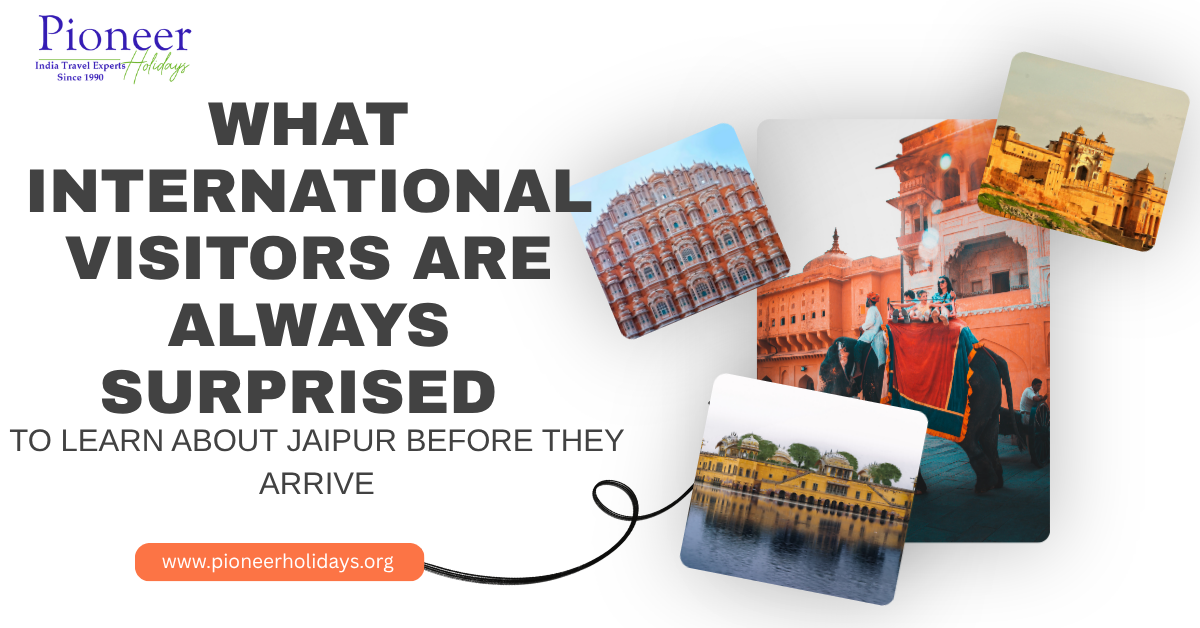
For most travelers researching about Jaipur expect a dusty heritage city with forts and camel rides. What they find is something far more layered — a working, chaotic, beautiful city where the 17th and the 21st century coexist without much effort at reconciliation. The travelers are mesmerised by sheer beauty of this ancient city.
What are the top 3 things international tourists say surprised them most about Jaipur?
1. The scale of the city. First-timers picture Jaipur as a compact old town. It’s actually a sprawling metropolis of over 4 million people. The old walled city — where most of the famous monuments sit — is dense and walkable in parts, but getting between Amber Fort, the City Palace, and Hawa Mahal takes longer than people expect when traffic is involved.
2. How alive the bazaars are. Visitors from Europe and North America often expect markets aimed at tourists. Johari Bazaar and Bapu Bazaar sell to Jaipuris every bit as much as to foreigners. Watching a local goldsmith settle a haggle over wedding jewelry while a foreign visitor browses block-printed fabric two stalls over — that’s a normal Tuesday morning.
3. The hospitality is not a performance. Multiple guests have mentioned being invited into a shopkeeper’s back room for chai, or having a stranger on the street offer to show them a shortcut, with no sales pitch attached. It disarms people who arrive with their guard up. Not everyone has a motive.
Which countries do most of our Jaipur and Golden Triangle travelers come from?
The biggest source markets are the US, UK, Australia, France, Germany, Italy, and Spain. Canadians make up a growing slice, and we see consistent interest from travelers in the Netherlands and Switzerland.
What draws them varies. American and British visitors often come with a Golden Triangle itinerary already in mind — Delhi, Agra, Jaipur as a self-contained India introduction. French and Italian travelers tend to show more interest in craft traditions: block printing, blue pottery, gemstone cutting. Germans often research Jaipur quite thoroughly before arriving and ask unusually specific questions about fort architecture.
Australian visitors, in our experience, tend to be the most relaxed about logistics and the most likely to wander off the planned route — which usually ends well for them.
What common misconceptions do foreign tourists have about Jaipur before arriving?
The biggest one: that Jaipur is just a photo stop. Many travelers arrive expecting to tick off Hawa Mahal and move on. They leave wishing they had booked two more nights.
A close second: the assumption that the Pink City is actually pink. The old city walls have a warm terracotta tone, and some buildings are painted in shades closer to salmon or rust. After a dry season or heavy pollution, the color mutes considerably.
It’s still striking, but visitors expecting Instagram-pink are sometimes briefly confused. Third: people assume Jaipur is unbearably hot year-round. Winters (November through February) are genuinely cool — cold at night, mild during the day. March and October are pleasant. The brutal heat is real but confined to a few months, and visiting outside that window changes the experience entirely.
Which Jaipur attractions impress visitors the most once they actually see them?
Amber Fort is the one that consistently gets people. The size of it, the hillside setting, the interior courtyards — photographs do not prepare you. Visitors who have seen European castles often say this feels more ambitious in scope.
Hawa Mahal gets photographed but sometimes underwhelms on arrival because most visitors only see the facade from the street. Going inside changes that. The view from the upper stories looking down into the bazaar is a different experience entirely.
The City Palace still functions as a royal residence, which surprises people. Knowing that a member of the royal family lives behind those walls while you tour the museum adds a quality most heritage sites lack.
For a complete picture of where to focus your time, the complete guide to Jaipur’s most famous attractions covers the full list with practical visiting advice.
What cultural experiences in Jaipur usually surprise foreign travelers?
The warmth inside people’s homes — if you get there. Some guided tours include a meal or chai visit with a local family. Visitors almost always rate these above the monuments.
Festivals shift the city completely. If your dates overlap with Diwali, Holi, or the Jaipur Literature Festival in January, the city you encounter is different from the one described in most travel guides. Teej in July/August draws local women in red and green dress for a procession that has nothing to do with tourism.
In markets, bargaining is normal, expected, and not adversarial. Many Western visitors find the back-and-forth uncomfortable at first and either overpay or avoid it entirely. A local guide who can show you fair price ranges removes the stress quickly.
One thing that catches people off guard: how seriously Jaipur takes its food. This isn’t a city coasting on tourist-friendly curry houses. Dal baati churma, ghewar, laal maas — these are things Jaipuris are proud of and cook properly. Eating where locals eat is not hard to arrange.
Makar Sankranti in Jaipur – Every January, Jaipur transforms into a colorful celebration as kites fill the sky from sunrise to sunset. Rooftops become gathering places where families enjoy traditional sweets, friendly kite battles, and festive energy. For visitors, it is a wonderful chance to experience the city’s vibrant local traditions and community spirit.
Do we have any real client stories or feedback that can be used as mini case studies?
A couple from Australia thought Jaipur would be a quick one-day stop, but they ended up loving it more than Delhi.
James and Claire from Melbourne booked a standard Golden Triangle itinerary with two nights in Jaipur. They told us beforehand that they were “really there for the Taj” and saw Jaipur as a bonus leg.
By the second morning, they had scrapped their afternoon plan to head back to their hotel early. Instead, they spent three hours at a block-printing workshop in the old city after striking up a conversation with the owner. Claire bought fabric. James bought nothing but said it was the best afternoon of the trip.
At Amber Fort that day, a guide explained the Mughal-Rajput political marriage that shaped the palace’s architecture. James later said this was the moment India “clicked” for him — understanding that these places are about specific people making specific decisions, not just generic antiquity.
They extended their Jaipur stay by a night, cutting a day from Delhi on the return. “Delhi was interesting,” Claire said in her feedback. “Jaipur felt like somewhere.”
What practical things about Jaipur surprise visitors?
Traffic: It is heavy, unpredictable, and follows its own logic. Build extra time into every morning. Leaving for Amber Fort at 8am instead of 9am makes a real difference.
Walkability: The old city bazaar area is walkable, but between major monuments you need transport. Auto-rickshaws, app-based cabs (Ola works reliably), and pre-arranged cars all function well.
Weather: Winters are genuinely cold at night. Pack a layer if visiting November through January.
Food options: Jaipur handles dietary restrictions better than most Indian cities. Vegetarian food is excellent and widespread. Many restaurants now clearly label jain options too.
Mobile connectivity: Indian SIM cards are cheap and fast to activate with a foreign passport. Coverage in the city and at all major attractions is reliable.
Payments: UPI and card payments work widely in hotels, restaurants, and larger shops. Carry cash for bazaar shopping and auto-rickshaws.
Safety: Street harassment exists but is not as intense as in some other Indian cities. Women traveling solo report varying experiences — being accompanied by a guide in the evenings makes a practical difference. For a broader view, this important safety advice for first-time Western travelers in India covers the subject honestly.
What mistakes do first-time visitors make in Jaipur that we help them avoid?
Underestimating travel time between sites. Amber Fort, Nahargarh Fort, and Jal Mahal are all north of the city. Planning all three in a single morning with 30-minute gaps between them is optimistic. Two sites with breathing room beats three sites at a sprint.
Visiting Amber Fort late in the day. The fort faces east. Morning light hits the entrance facade directly. By 2pm it’s in harsh sun and considerably more crowded.
Overpacking the schedule. Three major monuments, a bazaar, a cooking class, and a sunset view — in one day — is a common first draft. Pick less. The city rewards slowness.
Ignoring local etiquette at religious sites. Temples and some fort sections require covered shoulders and legs. A light scarf or shawl solves this immediately. Shoes come off at most active temples.
Booking the wrong transport. Shared tourist cabs that pick up multiple groups, unmetered auto-rickshaws without agreed fares upfront, or generic tour buses that rush through sites — these are common frustrations. A private car with a knowledgeable driver costs a little more and changes the day entirely.
How does Jaipur fit into your Golden Triangle Tour Packages?
Delhi and Agra give visitors Mughal history at scale — the Red Fort, Humayun’s Tomb, the Taj Mahal. Jaipur adds the Rajput layer: different architecture, different cuisine, different color palette, different temperament.
Most travelers find that five to seven days covers the Golden Triangle comfortably — two nights in Delhi, one in Agra, two in Jaipur minimum. Three nights in Jaipur is better.
Jaipur works particularly well for travelers interested in crafts, markets, food, and lived heritage rather than purely monumental sightseeing. It also works well as the final stop before flying home, since it has a slower pace than Delhi and a good selection of shopping.
If you’re weighing your options, you can explore our most popular Golden Triangle tour itineraries or browse our Jaipur sightseeing and cultural tour packages depending on how much time you have.
For travelers coming from Delhi without a multi-city itinerary, we also offer a private Jaipur day trip from Delhi by car and a same-day Jaipur tour from Delhi by superfast train for those who prefer the rail journey.
Not sure whether to do the Golden Triangle or a broader Rajasthan circuit? This comparison helps: compare Golden Triangle and Rajasthan tour experiences.
The honest summary: Jaipur rewards visitors who arrive with some flexibility and leave some days unscheduled. The fort is impressive. The food is excellent. The markets are real markets. And the city has a way of holding people longer than they planned.
If you want to plan this properly rather than figure it out on arrival, the team at Pioneer Holidays can put together an itinerary built around how you actually travel — not a generic route that works for everyone and suits no on.
Pioneer Holidays has been running private tours for international travelers since 1990. We have served more than 50,000 travelers and hold 7,100+ reviews on TripAdvisor. All Jaipur tours are 100% private — no shared groups, no fixed schedules, no compromise on your pace.
