
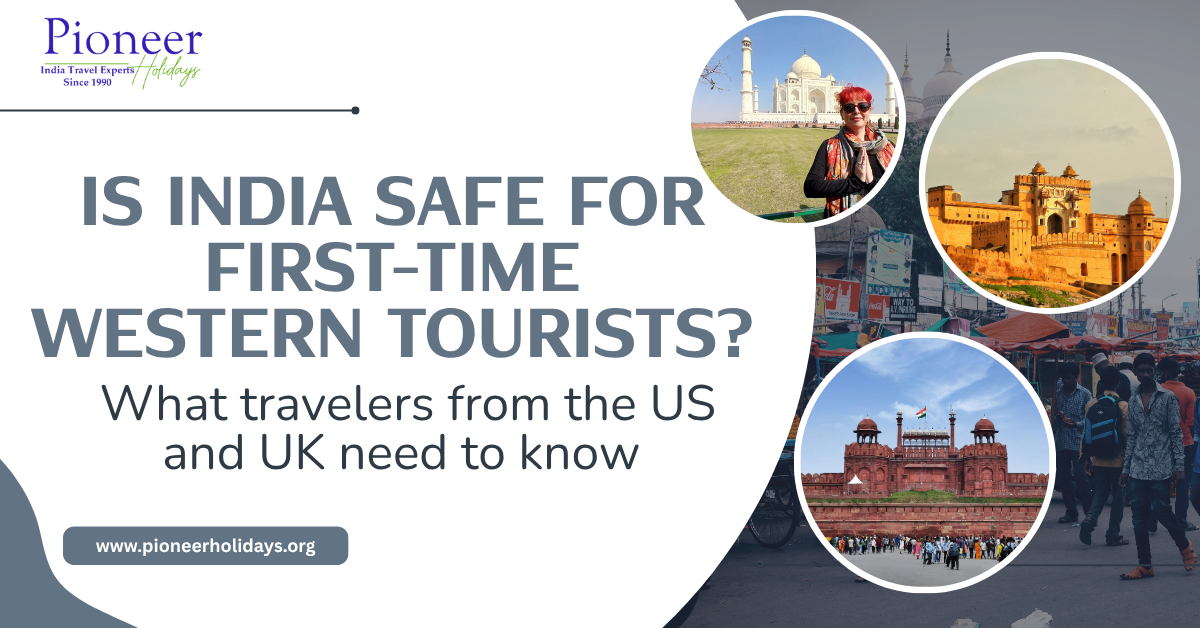
Most people planning their first trip to India go through the same cycle. They get excited about the Taj Mahal, start reading about Delhi, then fall down a rabbit hole of forum posts that leave them wondering whether they should bother at all. The concerns are not irrational — India is genuinely different from anywhere in Western Europe or North America — but a lot of what circulates online reflects extreme experiences, not typical ones.
The honest answer is this: India is safe for tourists who travel with some preparation and realistic expectations. It’s not effortless, but it’s far more manageable than most first-timers assume — especially if you stick to well-traveled routes with solid infrastructure. The Delhi–Agra–Jaipur route is one of India’s most visited corridors — even a compact, guided Delhi–Agra–Jaipur trip of four days is designed around tourist infrastructure that makes it genuinely manageable for first-timers.
Is India Actually Dangerous for Tourists?
This question deserves a straight answer rather than vague reassurances.
India has real safety challenges, and pretending otherwise does not help anyone. Petty scams targeting tourists exist. Traffic in major cities is chaotic by any Western standard. Hygiene conditions vary enormously. Women travelers face a different set of considerations than men.
At the same time, India receives tens of millions of tourists annually — including large numbers of solo Western women — and the overwhelming majority return home with stories about the food, the history, and the warmth of people they met, not about anything dangerous.
The risk profile changes significantly depending on where you go. Tourist corridors like the Golden Triangle — Delhi, Agra, and Jaipur — are structured around international visitors. You’ll find well-rated hotels with functioning plumbing, licensed guides, organized transport, and tourist police at major attractions. The infrastructure gap between these zones and more remote or lesser-visited parts of India is substantial.
What this means practically: your experience of safety in India is heavily shaped by how you travel, not just where.
Common Misconceptions About India
“India is dangerous because of poverty.” Poverty and danger are not the same thing. Many of India’s poorest regions are also some of its most welcoming to outsiders. The majority of interactions between tourists and locals are curiosity-driven, not threatening.
“The news makes India look terrible.” Crime happens everywhere, and media coverage is not a proportional guide to actual risk. Violent crime against foreign tourists is statistically rare, though it does happen, and it receives coverage that outpaces its frequency.
“You’ll definitely get sick.” Many people do experience stomach trouble in India. This is real. But it’s manageable — stick to cooked food from busy kitchens, avoid tap water, carry oral rehydration salts, and see a doctor before you go about what medications to bring.
“You can not trust anyone.” This one is particularly damaging because it makes people shut down in a country where asking for local help is often the most sensible thing to do. Yes, some people will try to hustle you. Most wo not.
Is Delhi Safe for Tourists?
Delhi gets a bad reputation, some of it deserved, most of it overblown for foreign visitors staying in tourist areas.
The parts of Delhi most tourists visit — Connaught Place, Chandni Chowk, the area around India Gate, Humayun’s Tomb — are well-policed, busy during daylight hours, and navigable for anyone paying attention. Auto-rickshaw scams around major railway stations are the most common issue, not violence. Pre-booking transport through your hotel or a verified app like Ola removes most of that friction.
Is Delhi safe for tourists at night? Broadly yes, with similar caveats to any large city. Avoid deserted areas after dark. Use ride-hailing apps rather than hailing tuk-tuks on the street. Travel in groups where possible.
Solo Travel and Women’s Safety
Solo travel in India is absolutely doable. Thousands of Western travelers — including solo women — do it every year. But it requires more active judgment than solo travel in, say, Portugal or Japan.
For women specifically, the concerns are real and worth taking seriously. Unwanted attention and staring in public spaces is common, particularly outside major tourist zones. Verbal harassment is less common than many fear, but not rare. Physical safety incidents do occur, though they’re a small fraction of total visitor experiences.
Practical things that make a difference:
- Dress modestly, particularly at religious sites and in smaller towns — loose trousers and covered shoulders are the baseline
- Book accommodation in advance and read recent reviews specifically from solo female travelers
- Trust your instincts; if a guide, driver, or tout makes you uncomfortable, you’re not obligated to continue the interaction
- Avoid arriving late at night in unfamiliar cities
- Keep family or friends updated on your itinerary
One of the most effective ways to sidestep safety concerns entirely is travelling with a vetted local operator — you can browse curated Golden Triangle tours with a private guide to see what a fully supported itinerary looks like.
Scams, Transport, and Cultural Awareness
The most common scams in India targeting Western tourists involve transport. Taxi and auto-rickshaw drivers who claim your hotel is “closed” or “flooded” and offer to take you somewhere else — usually a commission-based guesthouse — are a staple of Delhi and Agra. The fix is simple: book transport through your hotel or use Ola or Uber.
Gem scams are the other big one. Someone befriends you, seems genuinely helpful, then eventually mentions a cousin’s jewelry shop where you can buy stones to resell at a profit back home. It’s almost always nonsense. Walk away.
On transport more broadly: Indian trains are excellent value and one of the best ways to travel between cities, but booking in advance through the IRCTC website or a travel agent is essential for tourist quota seats. Domestic flights are cheap and reliable. For in-city travel, app-based taxis are your friend.
Cultural awareness matters more than most travel guides admit. Removing shoes at temples, using your right hand when accepting food or gifts, asking before photographing people — these are not optional niceties, they’re basic respect. Most locals in tourist areas have dealt with enough visitors to be patient, but you’ll have a better experience if you put in minimal effort here.
Why Pacing Matters More Than You Think
For most first-timers, the biggest mistake is rushing — a well-paced first trip through India’s three most iconic cities over five days gives you enough buffer to rest, adjust, and actually enjoy what you’re seeing. India is sensory and logistically demanding in ways that wear people out faster than expected. Jet lag from the US or UK hits hard. Switching cities every day leaves no time to recover from anything that goes wrong — a delayed train, a bad meal, a rough night’s sleep. The travelers who come back saying they loved India are usually the ones who built breathing room into their schedule.
Safety Across the Golden Triangle
The Golden Triangle route — Delhi, Agra, Jaipur — is the most visitor-friendly corridor in India, and for good reason. These three cities have handled international tourism for decades, which means the supporting infrastructure (accommodation, guides, transport, medical access) is significantly more developed than elsewhere.
| City | Main tourist areas | Common concerns | Risk level for visitors |
| Delhi | Connaught Place, Old Delhi, South Delhi | Transport scams, air quality | Low-moderate |
| Agra | Taj Mahal zone, Agra Fort area | Unofficial touts, overcharging | Low-moderate |
| Jaipur | Walled City, Amber Fort, Pink City | Gem scams, pushy vendors | Low |
None of these cities are danger-free. All of them are navigable. The concerns are predictable enough that knowing what to watch for removes most of the risk.
Frequently Asked Questions
Is India safe for American tourists specifically?
Yes. Americans visit India in large numbers without incident. The US State Department advises normal caution — the same level as many European countries. Your main practical differences from UK visitors involve checking ESTA/visa requirements and knowing that US travel insurance sometimes needs specific India coverage.
Do I need vaccinations before visiting India?
Talk to your doctor or a travel health clinic at least six weeks before departure. Hepatitis A, typhoid, and tetanus are commonly recommended. Malaria prophylaxis depends on your exact itinerary.
Is India safe for families with children?
Families do visit India successfully, but it requires more planning than a family trip to Western Europe. Food hygiene, heat, and the general intensity of busy cities are the main challenges. Families in particular tend to feel most comfortable on a fully structured tour — a Golden Triangle tour that includes a wildlife extension is a good example of how an escorted itinerary can make India feel genuinely family-friendly.
What’s the safest way to pay in India?
Carry a mix of rupees (exchanged at an airport or bank, not street kiosks) and a card with no foreign transaction fees. UPI payments are widely accepted in cities. ATMs work but occasionally run dry — do not rely on them exclusively.
Is India safe for LGBTQ+ travelers?
Homosexuality was decriminalized in India in 2018. Public displays of affection draw attention regardless of the couple involved, but India has a visible LGBTQ+ community in major cities. Exercise the same discretion you would in any conservative-leaning destination.
What to Expect, Realistically
India will not go smoothly the entire time. Something will be delayed, confusing, louder than expected, or different from what you booked. That’s not a flaw in your planning — it’s India being India, and most experienced travelers consider it part of what makes the place interesting.
What you’re trying to avoid is not all friction, just genuine harm — getting scammed badly, getting seriously sick, or ending up in a situation where you feel genuinely unsafe. All of those outcomes are avoidable with reasonable preparation.
If you want to take as much of the logistics off your plate as possible, Pioneer Holidays offers guided Golden Triangle itineraries specifically built for first-time Western visitors — private transport, curated accommodation, and on-the-ground support at each stop. It wo not eliminate every surprise, but it does mean you’re dealing with India’s richness rather than its paperwork.
