
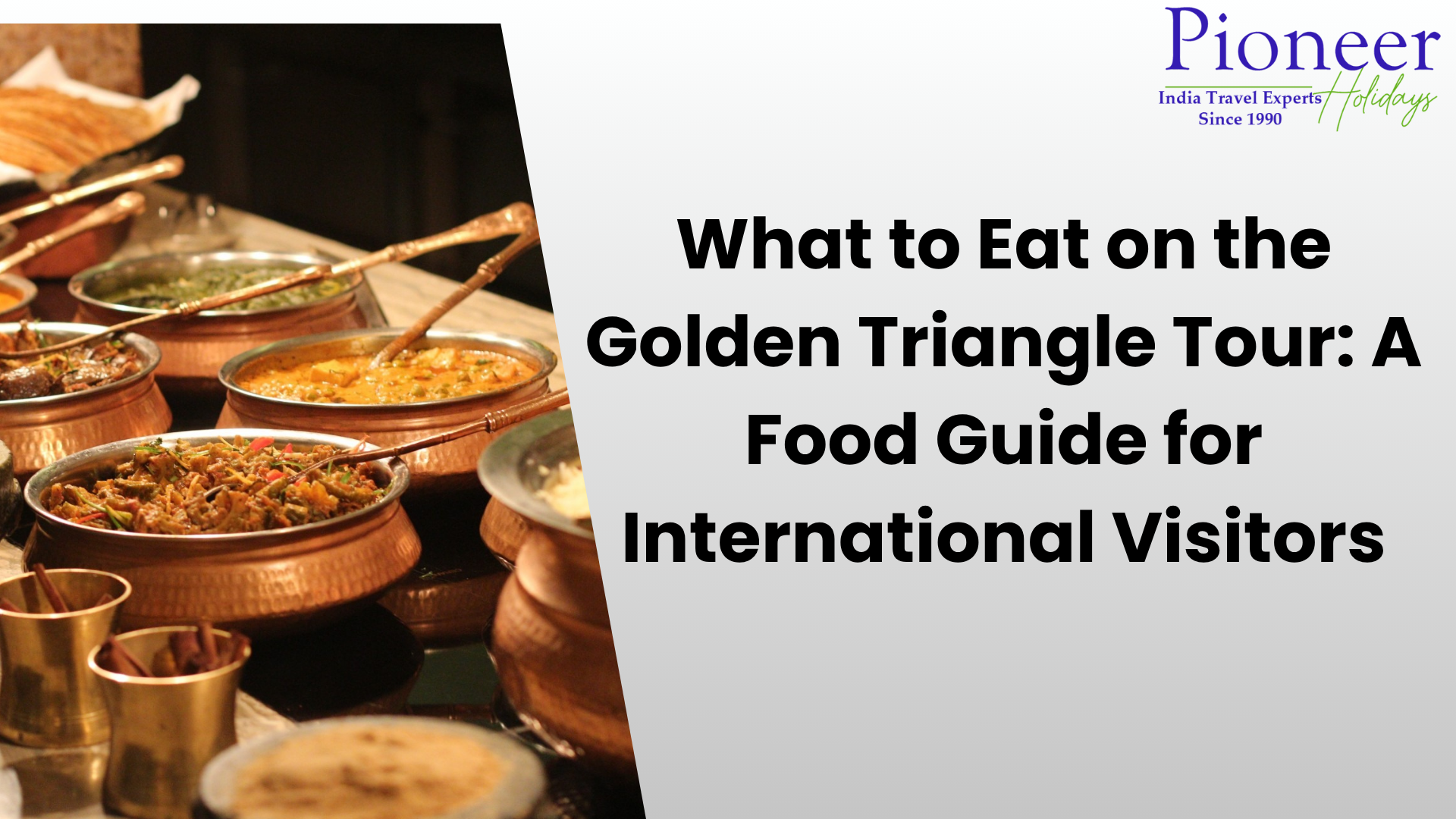
If you’re planning a trip through Delhi, Agra, and Jaipur, food is going to be one of the biggest parts of your experience, and honestly, one of the biggest sources of nervousness too. After guiding thousands of international travelers through these three cities, we’ve heard the same questions over and over: Is it safe? What should I actually order? What do I avoid?
This guide answers all of that, based on what actually works for first-time visitors, not generic internet advice.
Quick Answer: What to Eat on the Golden Triangle Tour
On the Golden Triangle tour, stick to freshly cooked, hot food from busy restaurants or well-reviewed street stalls. In Delhi, start with chole bhature and paneer paratha. In Agra, try petha and bedai. In Jaipur, dal baati churma and gatte ki sabzi are the local specialties. Avoid raw salads, cut fruit, and open juice from street vendors, and drink only sealed bottled water. Ease into spice levels gradually rather than diving straight into the hottest dishes on day one.
Our Recommended Foods for First Time International Visitors
Delhi
Delhi is where most Golden Triangle tours begin, and it’s also where travelers eat the most variety in the shortest time. Here’s what we suggest trying, and why.
Chole Bhature is a chickpea curry served with deep-fried bread, and it’s one of the most satisfying breakfasts you’ll ever have. Eat it in the late morning, since that’s when it’s freshest and the crowds haven’t thinned the pot down to leftovers. Spice level is medium, and most restaurants will tone it down if you ask.
Potato Paratha and Paneer Paratha are stuffed flatbreads, one with spiced potato and one with cottage cheese. These are gentle on Western stomachs and make a great first Indian meal since they’re mild and filling. Best eaten at breakfast with a dollop of yogurt on the side.
Pani Puri is the famous street snack: crispy hollow shells filled with spiced water, tangy tamarind, and potato. It’s delicious, but it’s also the one street food where hygiene varies the most from vendor to vendor. We usually recommend trying this only at a stall with high turnover and visibly fresh ingredients, or skipping it in favor of a restaurant version on day one.
Dahi Bhalla is a lentil dumpling soaked in yogurt and topped with tangy chutneys. It’s cooling, mildly spiced, and a good afternoon snack, especially in warmer months.
Kebabs in Delhi, particularly around Old Delhi, are smoky and rich. Try them in the evening when the grills are at full heat. Ask for mild if you’re not used to Indian spice blends.
Jalebi with Rabri is a syrup-soaked fried sweet served with thickened, sweetened milk. It’s best eaten fresh and hot, straight from the pan, ideally in the morning when the jalebi is crisp rather than soggy.
Winter Gajak is a sesame and jaggery brittle available only in the colder months, roughly November through February. If you’re touring in winter, this is a seasonal treat worth seeking out, and it travels well if you want to carry some home.
Agra
Agra is a shorter stop on most itineraries, but the food here has its own personality.
Petha is Agra’s signature sweet, made from ash gourd cooked in sugar syrup, and it comes in dozens of flavors from plain to rose to saffron. Every Golden Triangle traveler should try at least one box of petha before leaving Agra; it’s practically a rite of passage.
Bedai is a spiced, stuffed fried bread served with a potato curry, and it’s the Agra version of a hearty breakfast. Best eaten hot, early in the morning, from a shop that’s clearly busy with locals.
Jalebi here follows the same rule as Delhi: eat it fresh and hot, not sitting out.
Momos, the steamed or fried dumplings originally from the Himalayan region, have become popular street food across North India, including Agra. They’re generally a safer bet than open chaat since they’re cooked to order.
Bhalla Chaat is a tangy, savory snack similar to Delhi’s dahi bhalla, with a slightly different spice mix specific to the region.
Jaipur
Jaipur’s food leans heavier and more rustic, reflecting Rajasthan’s desert climate and history.
Dal Baati Churma is the state’s signature dish: baked wheat balls served with lentil curry and a sweet crumbled wheat dessert. This is a full meal, and one of the best examples of Rajasthani home cooking you’ll find in a restaurant setting.
Litti Chokha is a roasted wheat ball served with mashed vegetables, smoky and earthy in flavor. It pairs well with a mild yogurt side if you want to balance the intensity.
Gatte Ki Sabzi is a gram flour dumpling curry, thick and savory, and a good vegetarian option for travelers who want something substantial without meat.
Onion Kachori is a flaky, spiced fried pastry, best eaten as an afternoon snack with a cup of masala chai.
Ghewar is a disc-shaped, honeycomb-textured sweet soaked in syrup, traditionally associated with festivals but available year-round in Jaipur’s sweet shops.
Bengali Mithai, despite the name, is widely available across Jaipur’s sweet shops and offers a lighter, less syrupy alternative to some of the richer Rajasthani sweets.
Freshly cooked food from a busy vendor is almost always safer than food that has been sitting out, regardless of how clean the stall looks.
Food Safety Tips for Travelers with Sensitive Stomachs
Choosing where and what to eat matters more than avoiding Indian food altogether.
Foods to be cautious with:
- Open fruit juice from street carts, since the fruit and ice are often handled without gloves and may sit out for hours.
- Pre-cut fruit displayed in the open, especially in warmer months.
- Salads made with raw vegetables washed in tap water.
- Chowmein from roadside carts specifically, not because the dish itself is unsafe, but because it’s frequently cooked in advance and reheated on a shared griddle that also handles raw ingredients, which raises contamination risk more than most other street foods.
- Food that has clearly been sitting under a heat lamp or on display for a long stretch.
How to choose a safe restaurant or stall:
- Look for a high customer turnover; food moving quickly means it’s fresh.
- Watch whether the vendor cooks to order rather than serving from a pre-made pile.
- Check that raw meat and vegetarian items are prepared on separate surfaces.
- Prefer places where you can see the cooking happening.
- If a restaurant is recommended by your guide or hotel, that’s usually a stronger signal than a generic review.
Safe drinking habits:
- Always drink sealed, bottled water, and check the seal before opening.
- Avoid ice unless you’re at a reputable hotel or restaurant that uses filtered water for ice.
- Bottled or canned beverages are safe; anything poured from an open container at a street stall is riskier.
Hygiene basics that make a real difference:
- Carry hand sanitizer and use it before eating, especially with street food you eat by hand.
- Wash your hands with soap when a sink is available rather than relying on sanitizer alone.
- Carry your own tissues, since many street stalls won’t have napkins.
Freshly cooked food is safer because high cooking temperatures reduce harmful bacteria, which is why food served hot and fast from a busy stall is generally a better bet than something that has been sitting out.
Best Restaurants and Local Eateries
For travelers who want a mix of adventurous street food and reliable, comfortable dining, here are places worth knowing about across all three cities.
| City | Restaurant | Known For | Good for First-Timers |
|---|---|---|---|
| Delhi | Indian Accent | Modern Indian fine dining | Yes |
| Delhi | Bukhara | North-West Frontier kebabs and dal | Yes |
| Delhi | Kwality | Classic North Indian comfort food since decades | Yes |
| Delhi | Megu | Japanese-Indian fusion | Yes |
| Delhi | 1911 at The Imperial | Colonial-era dining, continental and Indian | Yes |
| Agra | Qairo | Rooftop views with Mughlai food | Yes |
| Agra | Salt Cafe | Casual, tourist-friendly menu | Yes |
| Agra | Romeo Lane | Desserts and casual dining | Yes |
| Agra | Two Saints | Rooftop dining near Taj Mahal | Yes |
| Agra | Molecule | Contemporary casual dining | Yes |
| Agra | Pyramid | Multi-cuisine, tourist-oriented | Yes |
| Agra | Taj Terrace | Views of the Taj with familiar menu | Yes |
| Agra | Pinch of Spice | Popular North Indian chain | Yes |
| Jaipur | Govindam Retreat | Vegetarian Rajasthani thali | Yes |
| Jaipur | Suvarna Mahal | Royal-style Rajasthani fine dining | Yes |
| Jaipur | Skyfall Restaurant | Rooftop views over the Pink City | Yes |
| Jaipur | Handi Restaurant | Traditional Rajasthani and Mughlai | Yes |
| Jaipur | Chokhi Dhani | Village-themed dining experience | Yes |
| Jaipur | 1135 AD | Fort dining with royal-style thali | Yes |
| Jaipur | Gulab Garh | Palace setting, Rajasthani cuisine | Yes |
Nearly all of these are well suited to first-time visitors because they’re used to serving international guests and can adjust spice levels on request. If you want a genuinely local flavor without the guesswork, ask your guide which of these your fellow travelers have enjoyed most on that specific day, since freshness and quality can vary slightly with the season and the crowd.
If you’re building your route around meals like this, a well-paced Golden Triangle itinerary with time to eat well makes a real difference, since rushing between monuments often means settling for whatever’s closest rather than what’s actually good.
Food Safety Tips During the Golden Triangle Tour
Before eating:
- Check that the restaurant or stall looks active and clean
- Avoid ordering the very first street food you see; walk a little and compare a few options
- Carry any personal medication for stomach sensitivity, just in case
While eating:
- Eat food while it’s still hot
- Avoid dishes that have been pre-plated and left out
- If something smells or tastes off, stop and don’t finish it out of politeness
After eating:
- Wash your hands again if you ate with your fingers
- Keep a small supply of antacids or rehydration salts in your day bag
- Note down what you ate that day if you’re trying new things each meal, so if something doesn’t agree with you, you can identify it later
Practical logistics:
- Restaurant timing in India tends to run later than in the West; lunch is typically 1 to 3 PM and dinner from 8 PM onward.
- Street food stalls are usually busiest and freshest in the evening, from around 6 to 9 PM.
- Carry small cash for street vendors, since most don’t accept cards, while restaurants generally take both.
- A polite “thank you” or a simple “namaste” goes a long way with vendors and often gets you a warmer, more generous serving.
Common Food Mistakes International Travelers Make
Eating too much street food on day one. Your stomach needs time to adjust. Start with milder, cooked dishes and build up over two or three days.
Trying the spiciest dish immediately. Indian spice isn’t just heat, it’s layered flavor, and jumping straight to the hottest option often means you miss the actual taste. Ask for mild first, and adjust upward as you go.
Skipping bottled water. Some travelers assume boiled tea or coffee is enough hydration. It isn’t. Always have sealed water on hand, especially in Rajasthan’s dry heat.
Choosing a vendor because it’s close, not because it’s good. Proximity isn’t a quality signal. A stall two minutes further with a longer queue of locals is usually the better choice.
Eating too late at unfamiliar places. Late-night street food, especially after a long day of sightseeing, is when judgment about hygiene tends to slip. Stick to familiar, recommended spots after dark.
Ignoring food allergies when ordering. Indian dishes often contain nuts, dairy, or gluten in ways that aren’t obvious from the name. Always ask directly rather than assuming.
Not asking about spice levels. Most restaurants catering to tourists will happily adjust spice on request, but only if you ask before ordering, not after the dish arrives.
Not carrying tissues or wet wipes. Many street stalls and smaller restaurants don’t provide napkins, so it’s worth keeping your own supply.
Food Options for Different Dietary Preferences
Vegetarian travelers will find India one of the easiest countries in the world to eat in. All three cities have extensive vegetarian menus, and dishes like paneer paratha, dal baati churma, and gatte ki sabzi are naturally meat-free.
Vegan travelers need to ask specifically about ghee and dairy, since many “vegetarian” dishes still contain butter or yogurt. Dals cooked without ghee, plain rotis, and most vegetable curries can usually be made vegan on request.
Gluten-sensitive travelers can rely on rice-based dishes and gram-flour preparations like gatte ki sabzi, but should be cautious with fried breads like bhature and kachori, which are wheat-based.
Travelers who prefer low-spice food should simply say “no spice” or “mild” when ordering; nearly every restaurant catering to international guests is used to this request and will genuinely adjust the dish rather than serving it as normal.
Halal travelers will find that most meat served at tourist-facing restaurants in Delhi, Agra, and Jaipur is halal, but it’s still worth confirming directly with the restaurant, particularly at smaller street stalls.
Children generally do best with mild parathas, plain rice, and simple dal, all of which are widely available and easy to order everywhere.
Senior travelers should prioritize freshly cooked, easily digestible options like khichdi (a simple rice and lentil dish) and avoid very oily or heavily fried street food, especially on travel days with a lot of walking.
Frequently Asked Questions
What should I eat on my first day in India?
Start with something mild and familiar in structure, like paneer paratha or chole bhature, rather than diving into street food immediately. This gives your stomach a gentle introduction before you try spicier or more adventurous dishes later in the trip.
How do I know if street food is safe to eat?
Look for high turnover, food cooked fresh in front of you, and a queue of locals rather than only tourists. Avoid anything that’s been sitting out or pre-plated for a while.
Who should avoid spicy Indian food entirely?
Anyone with a sensitive stomach, acid reflux, or no prior exposure to chili-heavy cuisine should start mild and build up gradually rather than avoiding Indian food altogether, since most dishes can be adjusted on request.
Can I drink tap water anywhere in Delhi, Agra, or Jaipur?
No, tap water isn’t recommended for travelers anywhere in India. Stick to sealed bottled water throughout your trip, and check that the seal is intact before drinking.
Should I carry my own snacks during the tour?
It’s a good idea to carry a few familiar snacks for long travel days between cities, but you shouldn’t need them for most meals, since restaurant and hotel food is reliably available throughout the tour.
When is the best time to try street food?
Evenings, generally between 6 and 9 PM, tend to be the busiest and freshest window for street food, since vendors are cooking continuously to keep up with demand.
What is petha and why is it specific to Agra?
Petha is a sweet made from ash gourd cooked in sugar syrup, and it’s become Agra’s signature confection over generations, sold in flavors ranging from plain to saffron to rose.
Can vegetarians eat well throughout the Golden Triangle tour?
Yes, very well. India has one of the most developed vegetarian food cultures in the world, and dishes like dal baati churma, gatte ki sabzi, and paneer paratha are widely available and satisfying across all three cities.
Final Thoughts
Eating well on the Golden Triangle tour comes down to a few simple habits: choose freshly cooked food, drink only sealed water, ease into spice levels, and trust busy, well-recommended spots over anything sitting out in the open. Do that, and you’ll come away with some of the best meals of your entire trip.
Since 1990, Pioneer Holidays has guided more than 50,000 international travelers through Delhi, Agra, and Jaipur, and food is always one of the most talked-about parts of the journey in our 7,100-plus TripAdvisor reviews. Every trip we run is completely private, with no shared groups and no fixed schedules, so you can eat at your own pace, linger over a meal you love, or skip ahead if something doesn’t interest you. If you’d like your trip planned around genuinely good food from the start, a private Golden Triangle tour with local dining included lets you experience all of this without the guesswork.
Follow us on – Instagram , facebook
