
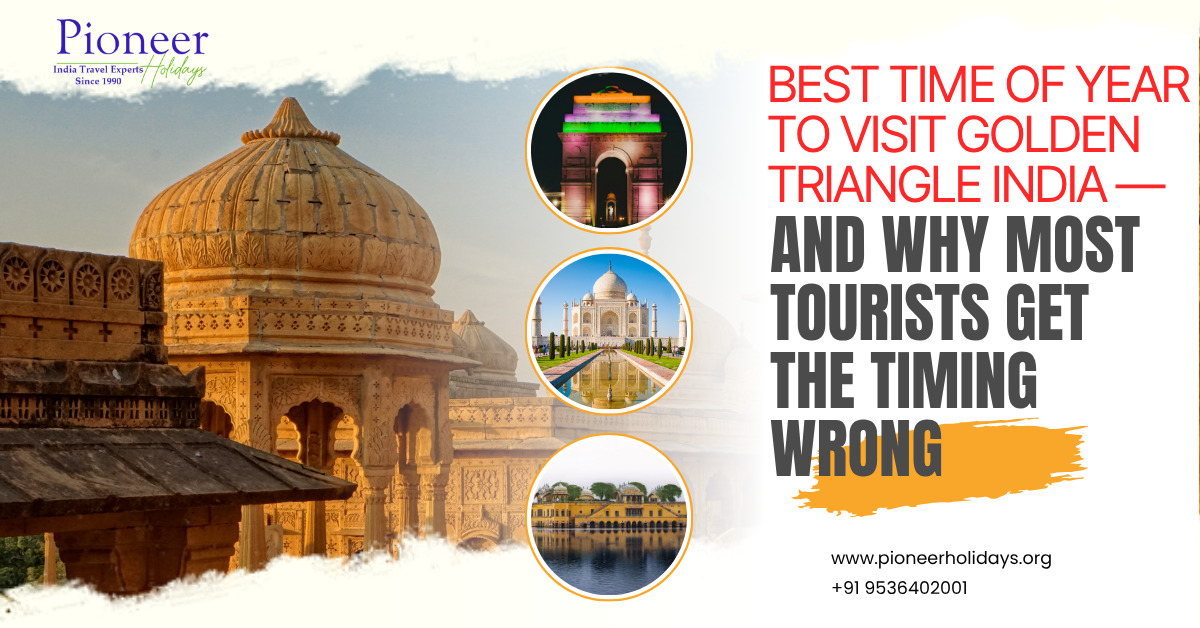
Most people searching for the best time to visit Golden Triangle India spend far more time picking hotels than they do actually thinking through when to go. That’s a mistake. The three cities — Delhi, Agra, and Jaipur — sit across a stretch of northern India that gets genuinely brutal in summer, surprisingly cold in January mornings, and temporarily chaotic during the monsoon months. Pick the wrong window and you’ll spend your days sweating through the Taj Mahal or shivering through Amber Fort at 7am in a thin jacket you thought would be enough.
The good news is that the Golden Triangle works for almost any trip length — if your annual leave is tight, you can still squeeze in a short India trip during the best travel window and come away with a genuinely full experience.
Why Most Tourists Choose the Wrong Season?
A lot of travelers default to what sounds obvious: summer holidays. June, July, August — school’s out, flights get booked, and suddenly people are landing in Delhi when temperatures regularly push past 42°C (108°F). The heat isn’t just uncomfortable. It drains your energy fast, limits how many hours you can actually spend outside, and turns places like Fatehpur Sikri — all open stone, no shade — into something closer to an ordeal.
The other common mistake is booking during the absolute peak of winter. December in Rajasthan sounds magical, and it can be. But it also means Jaipur and Agra are swimming in tour groups. Prices spike. The better hotels sell out by September. And a foggy morning at the Taj — which happens more than the brochures admit — can close sunrise access entirely.
The travelers who seem most satisfied are usually the ones who planned around shoulder season. They didn’t do it by accident.
The Four Seasons, Honestly Assessed
Summer (April to June): Only for the Very Heat-Tolerant
Delhi gets the worst of it. April already feels warm; by May, afternoons are genuinely dangerous for people not used to dry heat. Agra sits on the Yamuna plains and traps heat similarly. Jaipur, surrounded by the Aravalli hills, gets slightly less intense but not by much.
There are advantages, though. Summer is the cheapest time to visit by a wide margin. Hotels that cost ₹12,000 a night in November drop significantly. Crowds almost disappear. If you’re a budget traveler with a high heat tolerance and no flexibility on dates, you can have some iconic sites almost to yourself. Just start every morning by 6am, retreat indoors from noon to 4pm, and stay hydrated. Packing two sets of lightweight cotton clothes to change midday isn’t overcautious — it’s practical.
Monsoon (July to September): Misunderstood, Not Ruined
The monsoon reaches Delhi around late June and tails off through September. Most tourists skip this window entirely, which is partly why it deserves more credit than it gets. Yes, it rains. Yes, the humidity in August is real. But the downpours usually come in bursts — hard for an hour, then clear. The air washes clean. The heat drops 8–10 degrees compared to June.
Jaipur’s forts and havelis look genuinely different after a spell of rain — the pink sandstone deepens in color, the surrounding hills go green. Photography in this season, especially around the older city, produces images that look nothing like the bleached-out, hazy shots most people come back with from peak season.
Budget travelers do well in monsoon. Prices stay low, most sites are open, and the only real risk is the occasional road flooding or a cancelled sunset camel ride outside Jaipur.
Winter (October to February): The Main Season, With a Catch
This is the window most travel blogs recommend without qualification, and they’re not wrong — but they leave out a few things worth knowing.
October and November offer some of the most pleasant conditions across all three cities — enough time and good weather to justify a relaxed week across all three cities without feeling like you’re racing through it. Temperatures sit between 18°C and 28°C during the day. Visibility is good, mornings are crisp, and the tourist infrastructure is fully running. October is when things open back up after monsoon and before the crowds fully arrive.
December and January bring the crowds and the cold. Delhi gets foggy. Dense winter fog, not the soft romantic kind — the kind that grounds flights at Indira Gandhi Airport and delays trains for hours. If you have a tight connection or an early morning flight out, January fog is a genuine logistical risk. Jaipur stays drier and clearer than Delhi, but early mornings in both cities can drop to 6–8°C.
February is underrated. Crowds thin out slightly from the January peak. The weather stays mild and pleasant. Holi — the festival of colors — falls in late February or early March and adds a genuinely extraordinary dimension to Jaipur in particular.
Travelers with more time should consider the winter window — if you have eight days, you can extend the Golden Triangle into Varanasi during cooler months, when the ghats and dawn light on the Ganges are at their most atmospheric.
Shoulder Season (September to Early October): The Insider Window
September and early October are underrated — the monsoon clears, the landscape turns vivid green, and the crowds haven’t arrived yet. It’s an ideal window to pair Jaipur with Udaipur on a post-monsoon trip before the peak season rates kick in.
Seasonal Comparison Table
| Season | Months | Temperature Range | Crowd Level | Price Level | Best For |
|---|---|---|---|---|---|
| Summer | Apr–Jun | 35–45°C | Very Low | Low | Budget, heat-tolerant travelers |
| Monsoon | Jul–Sep | 28–38°C | Low | Low | Photographers, budget travelers |
| Early Winter | Oct–Nov | 18–30°C | Medium | Medium | First-timers, short trips |
| Peak Winter | Dec–Jan | 8–22°C | High | High | Festival seekers, long itineraries |
| Late Winter | Feb–Mar | 14–28°C | Medium | Medium | Couples, Holi travelers |
Monthly Weather Overview
| Month | Delhi High | Agra High | Jaipur High | Rain Chance | Notes |
|---|---|---|---|---|---|
| Jan | 21°C | 22°C | 22°C | Low | Fog risk, cold mornings |
| Feb | 25°C | 26°C | 26°C | Low | Good visibility, Holi prep |
| Mar | 31°C | 32°C | 31°C | Low | Holi (late month), warming fast |
| Apr | 37°C | 39°C | 38°C | Very Low | Heat building, early starts needed |
| May | 41°C | 43°C | 41°C | Very Low | Hottest month |
| Jun | 40°C | 41°C | 39°C | Medium | Pre-monsoon humidity |
| Jul | 35°C | 36°C | 34°C | High | Heavy rains, forts can be slippery |
| Aug | 34°C | 35°C | 33°C | High | Green landscapes, leeches at hill forts |
| Sep | 33°C | 34°C | 32°C | Medium | Clearing up, great light |
| Oct | 33°C | 34°C | 33°C | Low | Best shoulder window |
| Nov | 28°C | 29°C | 28°C | Very Low | Peak season begins |
| Dec | 23°C | 24°C | 23°C | Low | Busy, cold mornings |
Crowd vs Price vs Comfort
| Window | Crowds | Hotel Cost | Outdoor Comfort | Photography Quality |
|---|---|---|---|---|
| Oct–Nov | Moderate | Mid-range | Excellent | Good–Excellent |
| Dec–Jan | Busy–Very Busy | Premium | Good (cold AM) | Good (fog risk) |
| Feb–Mar | Moderate | Mid-range | Very Good | Very Good |
| Apr–Jun | Sparse | Budget | Poor–Very Poor | Harsh light |
| Jul–Sep | Sparse | Budget | Acceptable–Good | Excellent (monsoon light) |
Who Should Travel When?
First-time travelers asking about the best time to visit Golden Triangle India usually get pointed toward October and November — and that advice holds up. The weather is the most forgiving, the infrastructure is running smoothly, and the light for photography at the Taj and Amber Fort is genuinely good — warm without the bleaching effect that summer gives you.
Photographers tend to prefer the post-monsoon window (late September to mid-October) or February. Both offer a combination of manageable crowds, dramatic skies, and natural light that doesn’t flatten the architecture the way peak-summer midday sun does.
Budget travelers should look seriously at the monsoon months or late April. Yes, there are trade-offs. But the price difference is significant enough that many travellers use the savings to extend their trip by two or three days — or add Pushkar or Ranthambore to the itinerary.
Short-trip travelers with four to five days should strongly target October or early November. The days are long enough, the weather is predictable, and three cities in five days is actually manageable when you’re not losing afternoon hours to heat recovery.
Practical Packing Notes by Season
For winter travel, bring a proper layer for mornings. A light down jacket or a fleece that compresses is worth packing even if you think you won’t need it — the gap between an 8am Taj sunrise and a 2pm Jaipur palace visit is about 14 degrees of temperature difference.
For summer or monsoon travel, synthetic quick-dry fabrics beat cotton for everything except evenings. Carry a small pack of rehydration salts if you’re visiting in May or June. Pollution masks for Delhi are useful year-round but especially so in winter, when particulates sit low in the cold air.
FAQ
What is the best month to visit Agra?
October and November are the most reliable months. The Taj Mahal in morning light during these months, before the haze builds up, is about as good as it gets. March is a reasonable second choice before the heat arrives.
Is October the best time to visit Golden Triangle India?
October is one of the strongest windows of the year. The monsoon has cleared, temperatures are comfortable, and the main tourist season hasn’t fully kicked off yet, which means crowds are manageable and prices are mid-range. Most travellers who visit in October consider it a sweet spot.
How hot does Jaipur get in summer?
Jaipur regularly reaches 41–43°C in May and early June. The heat there is dry rather than humid, which makes it marginally more bearable than coastal cities, but sustained exposure is still genuinely draining. Outdoor sightseeing after 10am becomes very uncomfortable.
Is monsoon season good for India travel?
It’s not the disaster most people assume. July and August bring heavy rain but not constant rain. Jaipur and Agra are less affected than Mumbai or Kerala. The bigger issue is logistics — some rural roads flood and a few outdoor sites get temporarily muddy or slippery. The upside is low prices, vivid landscapes, and almost no queue at the Taj Mahal ticket window.
How many days are enough for Golden Triangle India?
Five days is the practical minimum for a meaningful trip — two nights in Delhi, one night in Agra, two nights in Jaipur. Seven days is more comfortable and lets you slow down at each stop rather than running a sightseeing relay. Ten days gives you enough room to add a side trip to Ranthambore, Pushkar, or Varanasi.
Final Thoughts
The best time to visit Golden Triangle India isn’t a single fixed answer — it’s the window that fits your heat tolerance, budget, travel pace, and what you actually want to see. The October–February window gets most of the attention because it genuinely works well for most travelers, but the shoulder months on either side of that window are worth serious consideration, especially if flexibility on price matters or if you want to photograph something that doesn’t look exactly like everyone else’s Instagram feed.
Once you’ve settled on your travel window, the next step is finding a tour that fits — you can explore Golden Triangle tour options by travel season and filter by duration, group size, and pace. Operators like Pioneer Holidays offer itineraries that map specifically to seasonal considerations, which makes it easier to match the pace of a tour to the conditions you’ll actually be traveling in.
