
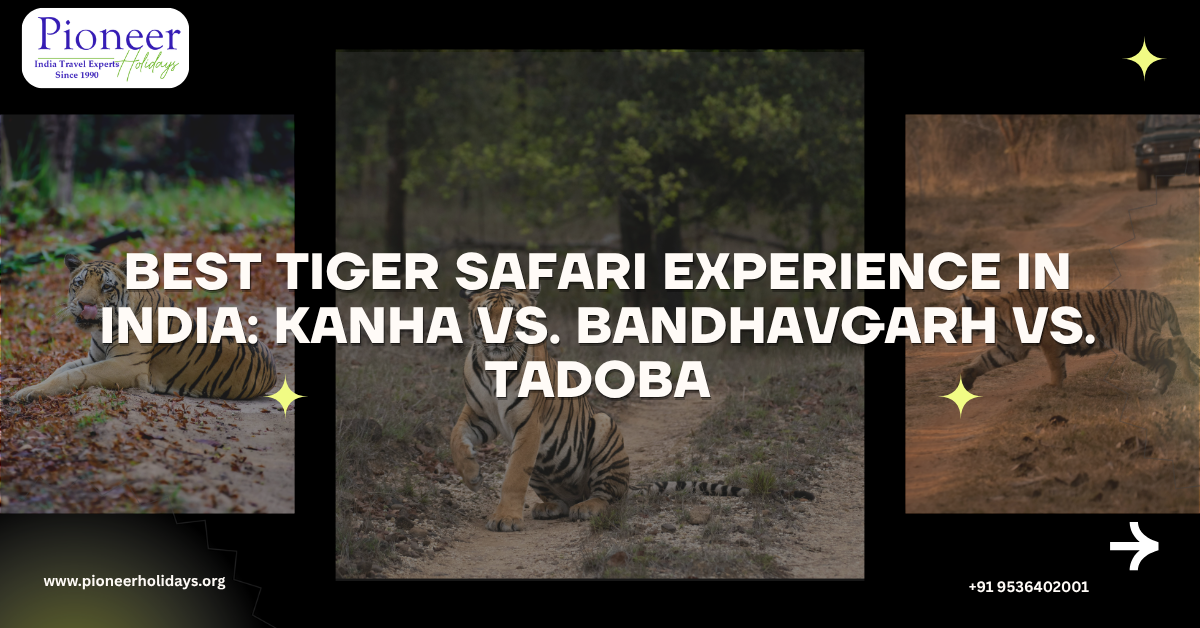
Every wildlife trip has that one moment you carry home forever. For most people who visit central India’s tiger reserves, it’s a Bengal tiger stepping out of the sal forest at golden hour — unhurried, indifferent to your presence, and absolutely enormous. The question is not whether you will love a tiger safari. You will. The real question is which park gives you the best shot at that moment, and which one fits how you actually travel.
Kanha, Bandhavgarh, and Tadoba are three of the most talked-about tiger reserves in India, and they’re genuinely different from each other — in landscape, accessibility, crowd levels, and what kind of traveler they suit best. This guide cuts through the noise so you can pick the right one for your trip.
A Quick Overview Before We Compare
All three parks fall under Project Tiger and sit in central India. Tigers live in all three. But that’s where the similarities start fading.
- Kanha National Park sits in Madhya Pradesh’s Mandla and Balaghat districts. It’s the park that inspired Rudyard Kipling’s The Jungle Book. Big, beautiful, and immersive — this is a full wildlife ecosystem, not just a tiger sighting machine.
- Bandhavgarh National Park, also in Madhya Pradesh, has one of the highest tiger densities in the world. If you have limited time and want maximum tiger sighting probability, this is often the first recommendation.
- Tadoba-Andhari Tiger Reserve sits in Maharashtra’s Chandrapur district. It’s been India’s quiet open secret for a decade — closer to Nagpur, less crowded than the Madhya Pradesh giants, and producing extraordinary tiger encounters.
Best Time to Visit
Kanha: October to June works well, but the sweet spot is February through May. The dry season thins out the vegetation, tigers move toward water, and sightings get much easier. The park closes from July 1 to October 15 during the monsoon.
Bandhavgarh: Similar closure pattern. February to May is peak season. The park gets genuinely hot in May, but that’s also when tiger sightings peak — animals congregate near water sources and are easier to spot.
Tadoba: Tadoba’s summer months (March to June) are legendary. The temperatures climb past 40°C, but this is when tiger sightings become almost routine. Unlike the Madhya Pradesh parks, Tadoba typically stays open through the monsoon in some zones, giving wildlife lovers more flexibility.
Tiger Sighting Chances: Be Honest With Yourself
This is what most people want to know, and the honest answer is: it depends.
Bandhavgarh has the highest tiger density per square kilometer among the three. Tala zone, its oldest and most wildlife-rich zone, delivers consistent sightings. On a good day in peak season, you can watch a tiger for 20–30 minutes without it moving off. First-time visitors often choose Bandhavgarh specifically for this reason, and it rarely disappoints.
Tadoba has been producing jaw-dropping encounters in recent years. The park has well-habituated tigers — animals that grew up around safari vehicles and do not treat them as threats. The Moharli and Kolara gates are especially productive. Many wildlife photographers now prefer Tadoba precisely because you can get closer, longer encounters without the bigger crowds.
Kanha has a strong and growing tiger population, but the park is vast — over 940 square kilometers in the core zone alone. Sightings are excellent, but they require a little more patience and luck compared to Bandhavgarh. What Kanha gives you in return is an all-round wildlife experience: barasingha (hard-ground swamp deer found almost nowhere else), huge herds of gaur, wild dog packs, and a landscape that genuinely feels like wilderness rather than a wildlife viewing circuit.
Crowd Levels and Safari Atmosphere
Bandhavgarh is popular, and that popularity shows. Peak season in Tala zone can feel rushed during tiger sightings — vehicles converge quickly. It’s managed well enough, but it’s not a solitary experience.
Kanha handles its crowds better because the park is larger and divided into multiple zones that distribute visitors. The atmosphere stays calmer even during busy months.
Tadoba is the least crowded of the three despite growing in reputation. Buffer zones offer genuinely quiet safaris where you might drive for an hour without seeing another jeep. For people who find the circus atmosphere around tiger sightings off-putting, Tadoba is a welcome change.
Comparison Table
| Factor | Kanha | Bandhavgarh | Tadoba |
| Tiger Sighting Chances | Good | Excellent | Excellent |
| Best Months | Feb – May | Feb – May | Mar – Jun |
| Landscape | Lush meadows & sal forest | Rocky hills & ruins | Dry teak forest & lake |
| Crowd Level | Moderate | High (peak season) | Low to Moderate |
| Overall Wildlife | Outstanding | Good | Very Good |
| Nearest Airport | Jabalpur | Jabalpur / Umaria | Nagpur |
| Budget Safari Cost | ₹3,500 – ₹6,000 per person | ₹3,500 – ₹6,000 per person | ₹2,500 – ₹5,000 per person |
| Best For | All-round wildlife, families | First-timers, quick trips | Photographers, repeat visitors |
Costs are approximate and vary by season, zone, and operator. Gypsy + guide + permit fees apply.
Who Should Go Where
First-time tiger safari visitors: Bandhavgarh. The probability of a tiger sighting is higher, and the compact geography means you spend more time watching wildlife and less time searching. The experience feels satisfying even on a short two-night trip.
Wildlife photographers: Tadoba. The habituation levels among tigers here are exceptional, and the dry landscape gives you clean sightlines without dense undergrowth blocking your frame. Summer light in Tadoba is harsh but golden in the early hours.
Families with kids: Kanha. The landscape is gentler, the wildlife variety is rich enough to keep everyone engaged, and the resort options around Kanha are excellent for families. The barasingha alone are worth the trip — kids love them.
Serious wildlife enthusiasts: All three over multiple visits, but start with Kanha for the full ecosystem experience before the others.Budget-conscious travelers: Tadoba tends to cost slightly less and offers good-quality lodges without the premium pricing of some Kanha and Bandhavgarh properties.
Practical Travel Tips
- Book permits early. Core zone permits sell out fast, especially for Bandhavgarh’s Tala zone and Tadoba’s Moharli gate during peak season. Book 90+ days ahead if you can.
- Do two safaris per day. Morning and evening safaris give you the best odds. Tigers are most active at dawn and dusk.
- Choose a good naturalist. A skilled guide makes an enormous difference. Ask your lodge specifically about their naturalists before booking.
- Pack light layers. Mornings in February and March can be cold (8–12°C), while afternoons hit 30°C+. A light jacket you can peel off is essential.
- Camera gear: A 400mm lens or above is ideal for wildlife photography. Even a 200–500mm zoom on a crop sensor camera will serve you well.
- Stay inside the park buffer. Properties right at the park boundary mean early entry without a long drive. It matters more than you think.
Making the Final Call
If you only have one trip planned and you want to see tigers, Bandhavgarh is the safest bet for a first timer. If you’ve been once before and want something more immersive, quieter, and visually spectacular, Tadoba will change how you think about wildlife tourism. And if you want the complete central Indian forest experience — the whole chorus of sounds, species, and seasons — Kanha is in a class of its own.
Many experienced safari-goers do a circuit: Kanha for three nights, Bandhavgarh for two, with Tadoba as a standalone weekend trip from Nagpur. It’s a lot of ground, but this part of India rewards the effort. For trip planning, logistics, and customized safari itineraries across all three destinations, Pioneer Holidays is a name worth knowing — they specialize in wildlife travel across India’s tiger reserves and take care of permit bookings, naturalist arrangements, and accommodation in one place, which saves you the usual headache of coordinating it all yourself.
FAQs
1. Which tiger reserve has the highest success rate for tiger sightings?
Bandhavgarh has one of the highest tiger densities in India, making it the most consistent for sightings. Tadoba comes close in the summer months when tigers concentrate around water sources.
2. Can I do a tiger safari in India on a budget?
Yes. Tadoba is the most affordable of the three, with government-run gypsies available at lower rates. Staying in buffer zone lodges rather than core zone resorts also cuts costs significantly while still delivering quality safaris.
3. Is it safe to go on a tiger safari with young children?
It’s generally very safe. Children above five years are allowed in most zones. Kanha is particularly family-friendly because of its calm landscape and diverse wildlife. Children must remain seated in the vehicle at all times during the safari.
4. How many safaris should I plan per day?
Two safaris per day — one starting before sunrise and one in the late afternoon — is the standard and recommended approach. It gives you twice the exposure and covers the two periods when tigers are most active.
5. Do I need to book tiger safari permits in advance?
Absolutely, and the earlier the better. Bandhavgarh’s Tala zone and Tadoba’s Moharli gate sell out weeks — sometimes months — ahead during peak season. Online booking through the Madhya Pradesh or Maharashtra forest department websites is the most reliable method.
You May also Like – Which is the Better National Park, Kanha or Ranthambore? , How Many National Parks and Wildlife Sanctuaries are There in Rajasthan? , How to See Tigers in Ranthambore National Park , 10 Fascinating Bird Species in Ranthambore National Park
