
Introduction
If you are standing at a crossroads trying to decide between Kanha and Ranthambore for your Indian wildlife adventure, you are definitely not alone. Both parks have earned their reputation as premier tiger destinations, and the choice between them often keeps travelers awake at night scrolling through endless comparison posts. Here’s what I have discovered after years of talking with visitors who have returned from both: the “better” park does not actually exist. What matters most is understanding which one aligns with what you genuinely want from your jungle experience.
I wrote this guide because the typical comparison articles out there tend to be generic and unhelpful. They recite facts without explaining the real differences that matter to you—the traveler sitting in an office or home wondering where to invest your time and money. Let me walk you through both parks honestly and help you figure out which one deserves your next vacation.
Understanding the Two Parks
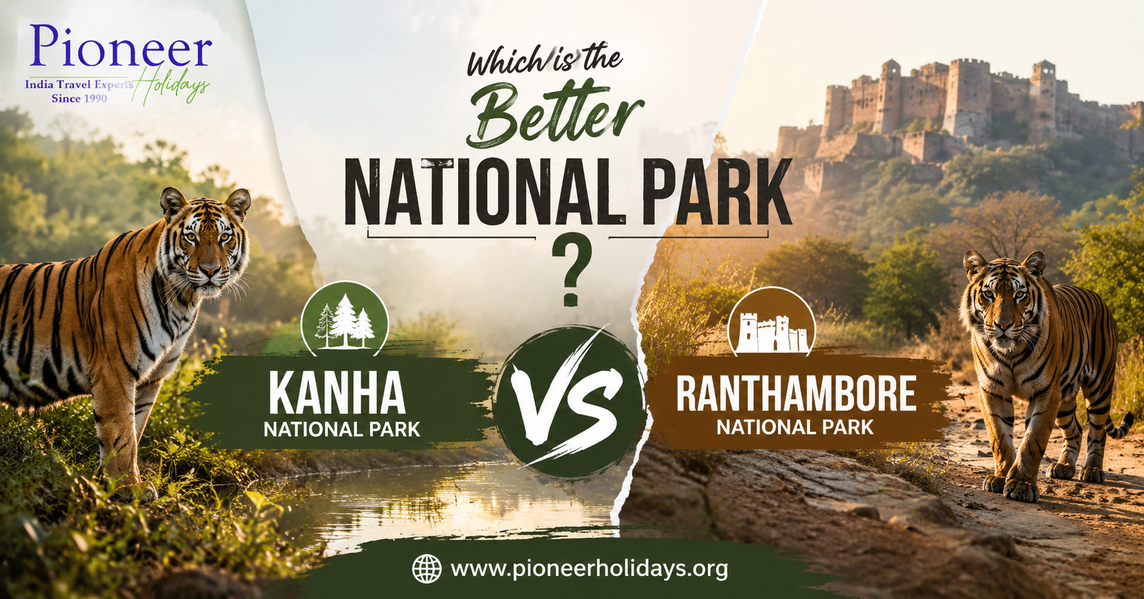
Kanha National Park sits in Madhya Pradesh and covers an impressive 940 square kilometers of mixed sal and bamboo forests. It’s India’s second-largest tiger reserve and has consistently maintained a thriving tiger population. The park gained worldwide recognition through Rudyard Kipling’s stories, though that fictional version seems almost tame compared to the real animal encounters here.
Ranthambore National Park sprawls across Rajasthan near the town of Sawai Madhopur. It’s smaller at 392 square kilometers, but do not let that fool you into thinking it offers less drama. Ranthambore is famous for its individual tiger personalities—visitors often recognize and name specific tigers they encounter. The park’s landscape, dotted with ancient fortress ruins, creates an almost mystical backdrop that feels unlike anywhere else.
The fundamental difference is this: Kanha offers you a classic jungle experience where you disappear into wilderness, while Ranthambore provides a tiger experience where the animals are habituated to vehicles and easier to spot. This distinction shapes everything else about your visit.
Wildlife Experience: Beyond Just Tigers
Here’s something people do not talk about enough: a great wildlife experience involves far more than seeing one specific animal.
At Kanha, the wildlife density feels different. You will encounter deer species like the swamp deer, which the park has specifically worked to protect and restore. Sambar deer move through the forests like silent giants. Suddenly, you might spot a sloth bear in the afternoon—an encounter that leaves your heart racing in ways tiger spotting sometimes does not. The park hosts leopards, wild boar, and an incredible variety of birds. On many safaris, visitors see more species variety than tigers, which sounds counterintuitive but transforms your entire experience. You are not just chasing one animal; you are witnessing an entire ecosystem functioning.
Ranthambore offers a more concentrated wildlife encounter. The animals here include tigers, leopards, sloth bears, and various deer species, but the park feels more crowded with safari vehicles. This is not necessarily negative—it means wildlife tends to be more predictable and sightings more frequent. If you are visiting for five days and absolutely must see a tiger, Ranthambore plays better odds. But if you are hunting for that transcendent moment where the jungle reveals its secrets naturally, the experience differs.
Tiger Sighting Chances: The Honest Reality
Let’s address the elephant—or rather, the tiger—in the room. People book these parks primarily for tiger sightings, so this matters deeply.
Ranthambore wins on sighting probability. The tigers here are habituated to vehicles, and park authorities track their movements quite effectively. During the peak season from November to March, first-time visitors report tiger sightings on 60-70% of their safaris. Some lucky travelers see them on multiple days. The tigers are used to human presence, so they often ignore vehicles and carry on with their daily business.
Kanha presents a different scenario. Tiger sightings happen here—the park hosts roughly 100-110 tigers across its terrain—but they are genuinely wild animals. You might spend three days without seeing one, then encounter two on the fourth morning. This unpredictability bothers some visitors and excites others. The advantage? When you finally see a Kanha tiger, it feels like you have truly earned the moment. These animals have not grown accustomed to human presence, so their behavior seems more authentic and raw.
Here’s my honest take: Ranthambore gives you a higher chance of seeing a tiger. Kanha gives you a higher chance of having a transformative wildlife experience. Sometimes these are the same thing, but often they are not.
Jungle Landscape: The Visual Experience
The physical landscape shapes how a safari feels more than people realize.
Kanha’s forests are dense and lush. Sal trees tower overhead, and during the monsoon months, everything seems draped in emerald. The grasslands here—particularly the Kanha meadow—create stunning openings where animals gather to graze. In winter, visibility improves dramatically, and the landscape takes on warm golden tones. The terrain feels untamed and primordial. You are not just observing wildlife; you are moving through their world.
Ranthambore’s landscape includes rocky outcrops, dry deciduous forests, and numerous water sources like Padam Lake and Malik Talab. The ancient Ranthambore Fort sits atop a hill within the park, creating dramatic silhouettes, especially during sunrise and sunset. The terrain feels more dramatic in a different way—less deep jungle, more exposed vistas. Water bodies concentrate animals during dry season, which aids spotting but changes the aesthetic of your experience.
If you love that feeling of being swallowed by forest, choose Kanha. If you prefer dramatic vistas with wildlife framed against historic architecture, Ranthambore speaks to that desire.
Safari Experience: How Time Unfolds Differently
A safari is not just about what you see; it’s about how the time feels.
Kanha safaris typically last four hours and follow designated routes through the forest. Your guide navigates slowly, stopping frequently to listen for alarm calls or spot movement. The pace feels meditative. You are learning to read the jungle—understanding why a particular patch of grassland holds significance, recognizing territorial scratch marks on trees, listening to birds alert you to predator presence. The emphasis is on understanding the ecosystem rather than checking off sightings.
Ranthambore safaris also run four hours, but the terrain’s open nature means guides often move more quickly between spots. Popular locations like Jogi Mahal or Malik Talab get bustling with multiple vehicles, especially during peak season. If you visit during October or April, you might find yourself sharing viewpoints with ten other jeeps. This affects the exclusivity of your experience, though it does not necessarily diminish the wildlife encounters.
For solitude and immersion, Kanha wins. For tiger probability and convenience, Ranthambore serves better.
Comparison Table: Quick Reference
| Factor | Kanha | Ranthambore |
| Park Size | 940 sq km | 392 sq km |
| Tiger Population | ~100-110 | ~70-80 |
| Tiger Sighting Probability | 40-50% | 60-70% |
| Best Season | November-May | November-March |
| Average Temperature (Dec-Feb) | 8-25°C | 10-28°C |
| Nearest Major City | Jabalpur (170 km) | Sawai Madhopur (4 km) |
| Accessibility | Moderate | Excellent |
| Safari Crowding | Low to Moderate | Moderate to High |
| Wildlife Diversity | Very High | High |
| Photography Quality | Excellent | Very Good |
| Ideal Trip Length | 4-5 days | 3-4 days |
Best Time to Visit: Seasonal Considerations
Both parks operate on seasonal schedules, and timing dramatically affects your experience.
Kanha opens from November through June. The peak season runs from November to February when temperatures remain cool and visibility is crystal clear. December and January are peak months, attracting visitors worldwide. By March, heat increases but wildlife still moves actively. The park closes during monsoon season, which is actually when the landscape looks most dramatic—but you ca not visit. If you travel in May or early June, you will face extreme heat and sparse crowds, which attracts photographers but challenges casual visitors.
Ranthambore also follows a similar November-June schedule. However, the best time genuinely feels different here. The park reaches its prime from mid-December through February when cool weather drives animals to water sources, increasing visibility. By April, heat becomes intense, and animals become sluggish. Many experienced guides actually recommend visiting in October or late February when crowds thin but conditions remain pleasant.
Here’s a practical tip: if you are flexible with dates, visit either park in late February or early March. You will find fewer tourists, better wildlife movement due to moderate temperatures, and more authentic experiences. The trade-off is slightly lower tiger probability compared to December-January peak season.
Accessibility and Reaching the Parks
Getting to your chosen destination matters more than travelers realize.
Kanha requires more planning. The closest major city is Jabalpur, approximately 170 kilometers away. From Jabalpur, you will drive about four hours through varied terrain to reach the park. Delhi-based travelers typically fly to Jabalpur (flights exist but are not as frequent as major routes), then arrange ground transport. Alternatively, you can travel by train to Jabalpur and hire a vehicle from there. The journey adds a full day to your trip but contributes to the sense of arriving somewhere remote and special.
Ranthambore wins decisively on accessibility. Sawai Madhopur sits just 4 kilometers from the park, and the town has direct rail connections to major Indian cities like Delhi, Mumbai, and Agra. You can realistically take an overnight train from Delhi, arrive in the morning, and be on a safari by afternoon. This convenience makes Ranthambore perfect for travelers combining it with other destinations—many people visit the Golden Triangle and Golden Triangle Tour with Ranthambore combines both seamlessly.
If logistics stress you out, Ranthambore removes that burden. If you prefer surrendering to the journey, Kanha’s distance adds to the adventure.
Photography Opportunities: Capturing Memories
I’m including this section because many travelers do not admit how much the photography angle influences their choice.
Kanha’s dense forest creates intimate wildlife moments. Subjects are often framed by foliage, which adds depth and context to photographs. The soft morning light filtering through sal trees produces stunning natural lighting. However, dense vegetation sometimes limits distant compositions. If you are an experienced wildlife photographer, Kanha challenges and rewards you simultaneously.
Ranthambore offers dramatic composition possibilities. Rocky outcrops, water reflections, and the historic fort create stunning backdrops. Animals at water sources provide clear, well-lit photography opportunities. The open terrain means you are not fighting vegetation. However, the popularity sometimes means multiple vehicles interfere with clean shots. Professional photographers often visit during shoulder season precisely to avoid this congestion.
Here’s my suggestion: if photography is your primary passion, you will succeed at either park with different aesthetic outcomes. Kanha produces moody, forest-immersed wildlife images. Ranthambore produces dramatic, landscape-integrated compositions.
Family Travel Experience: Bringing Children
Family trips to wildlife parks require different considerations than adult-only adventures.
Kanha works beautifully for families with older children (eight years and up). Younger kids sometimes struggle with the quiet, meditative pace and the unpredictability of wildlife encounters. However, families consistently report that Kanha teaches children patience and observation skills. The fewer crowds mean less overstimulation. Accommodations range from luxury resorts to budget lodges, suiting various family budgets. Local guides excel at making the experience age-appropriate, sharing stories and teaching ecological concepts.
Ranthambore attracts more families overall. The higher tiger-sighting probability means kids experience more “big moment” encounters, which keeps excitement levels high. Shorter distances between sites mean less vehicle time. Accommodations here run the full spectrum, and Sawai Madhopur town offers more dining variety. However, crowded safari vehicles occasionally disappoint families seeking intimate experiences.
If your kids get restless easily, Ranthambore’s sighting probability helps. If you are raising nature-loving children who appreciate the learning journey, Kanha develops that deeper connection.
Budget and Accommodation Considerations
Let’s talk money, because it absolutely influences your decision.
Accommodation Range
Kanha offers options across multiple price points:
- Budget lodges run between 2,000-4,000 rupees per night
- Mid-range resorts range from 4,000-10,000 rupees
- Luxury properties exceed 15,000 rupees nightly
Ranthambore has similar pricing patterns:
- Budget options: 1,500-3,500 rupees per night
- Mid-range: 3,500-9,000 rupees
- Luxury: 10,000+ rupees
The key difference is accommodation quantity. Ranthambore has more options overall due to its proximity to Sawai Madhopur town, giving budget travelers more choices. Kanha’s limited accommodation means fewer bargains during peak season, and prices sometimes spike.
Safari Costs
Both parks charge similar daily safari fees (approximately 3,000-5,000 rupees per person for a half-day jeep safari). However, Kanha guides sometimes command higher rates for genuine expertise in that particular park. Ranthambore guides, more plentiful and competitive, sometimes offer negotiable rates.
Budget-conscious travelers should consider:
- Visiting during shoulder season (April-May or September-October) for lower rates
- Booking accommodation directly rather than through third-party sites
- Combining multiple nights at one location rather than moving between parks
Practical Travel Tips
Here’s wisdom gathered from countless traveler conversations:
- Bring binoculars. This single item multiplies your wildlife-spotting success immensely.
- Wear earth-toned clothing. Bright colors disturb animals and reduce your chances of close encounters.
- Start early. The best wildlife activity happens between 6-9 AM and 4-7 PM.
- Hire experienced local guides. This investment fundamentally changes your experience.
- Bring a good camera even if you are not a photographer—moments deserve documentation.
- Stay flexible. Your guide knows current animal patterns better than any pre-planned itinerary.
Head-to-Head: Choosing Your Park
Let me distill this into digestible decision-making:
Choose Kanha if:
- You want an authentic, wild jungle experience
- You have 4-5 days available for your trip
- You value solitude and immersion over sightings
- You are traveling with nature-loving companions
- Photography interests you, particularly forest ecology
- You are willing to invest in reaching a remote destination
Choose Ranthambore if:
- Tiger sighting is your primary objective
- You have limited time (2-4 days)
- You are combining this with other destinations like Agra or Delhi
- You prefer convenience and accessibility
- You are traveling with kids who need predictable excitements
- Your budget demands accommodation variety and flexibility
Frequently Asked Questions
Q: Can I visit both parks on one trip?
A: Absolutely. Many travelers combine them into 7-10 day itineraries. You will need flight connections (likely through Delhi or Jabalpur), but both parks operate simultaneously during season. Just accept that back-to-back parks means less depth at each location.
Q: Which park is more expensive overall?
A: Costs are comparable, but Kanha sometimes edges higher due to fewer accommodation options and premium pricing during peak season. Ranthambore offers more budget flexibility.
Q: What if I do not see a tiger?
A: At Kanha, there’s genuinely a 30–40% chance that you won’t see a tiger, and that’s okay—the ecosystem itself offers extraordinary wildlife experiences. At Ranthambore, however, not seeing a tiger often feels disappointing because the sighting probability is around 60–70%. Choose Kanha if you’re comfortable embracing the overall jungle experience, even without a tiger sighting. Choose Ranthambore if seeing a tiger with higher certainty matters more to you.
Q: Is one park better for photography?
A: Different, not better. Kanha produces intimate forest images; Ranthambore delivers dramatic landscape compositions. Your photography style determines which suits you better.
Q: When should I book my trip?
A: Reserve accommodation and guides 2-3 months before travel during peak season (December-January). Shoulder season (February-March) allows last-minute bookings without penalty.
Conclusion: Your Decision, Your Adventure
Here’s the truth I have arrived at after hearing countless traveler stories: Kanha or Ranthambore is not really a choice between good and better. It’s a choice between two profoundly different experiences that both deserve your consideration.
Kanha calls to travelers seeking transformation through wildness. It’s the park you choose when you want the jungle to reshape how you see yourself in nature. Ranthambore attracts those prioritizing tiger encounters and seamless logistics. It’s the park you choose when you want concentrated, high-probability wildlife drama.
Neither choice is wrong. Neither experience disappoints if you enter with aligned expectations. The magic happens when you are honestly asking yourself: Do I want to disappear into wilderness and find my tiger gradually, or do I want to arrive easily and meet India’s big cat face-to-face almost certainly?
Once you answer that question, your park chooses itself.
If you are interested in combining your Ranthambore visit with broader travel plans, explore options through established tour operators. Pioneer Holidays, for instance, offers comprehensive packages that integrate multiple destinations efficiently, making logistics seamless while keeping your focus on the experience itself.
Pack your bags, trust your instincts, and prepare for one of India’s most rewarding wildlife experiences. Whichever park you choose, the jungle is waiting.
Additional Resources
Before booking, check current park notifications, weather forecasts, and guide availability through official channels. The Madhya Pradesh and Rajasthan tourism boards maintain updated information about seasonal closures and entry requirements. Spend time with your chosen guide during pre-trip conversations—their enthusiasm often predicts your experience quality more accurately than any review.
