
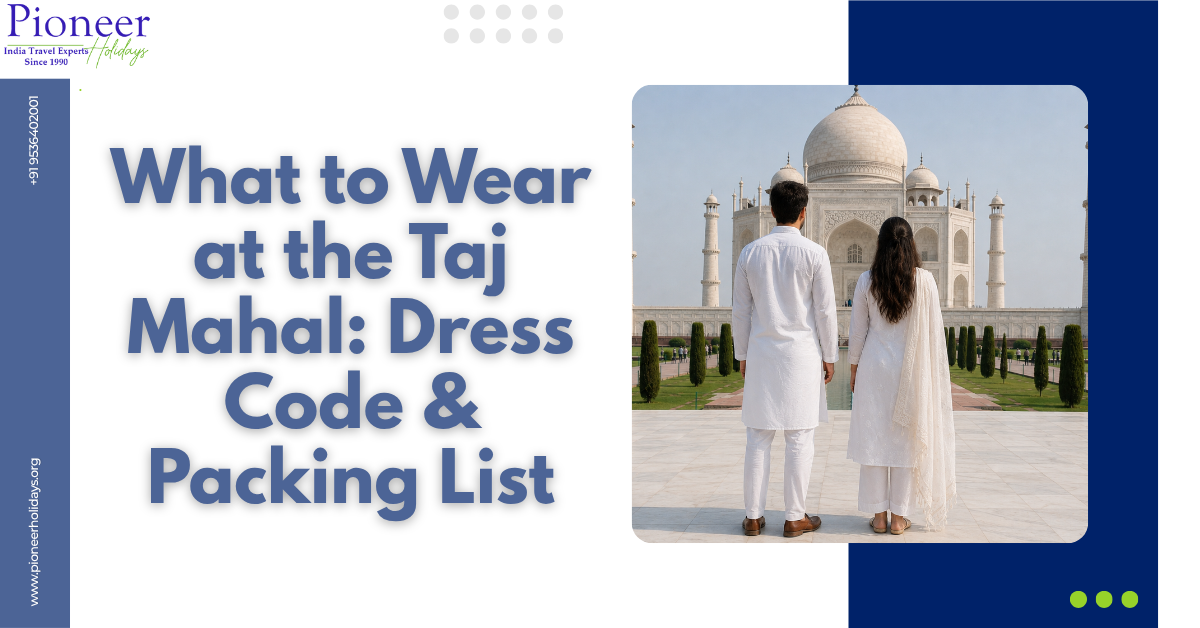
You have booked the trip. You have got the photos saved on your phone — that classic shot with the reflecting pool, the marble archway, the sun rising behind the domes. Now you’re wondering what to actually wear.
Getting the Taj Mahal dress code wrong is more common than you did think. People show up in sleeveless tops and get turned away at the entrance. Others wear thick jeans on a 42°C Agra afternoon and spend the whole visit miserable. A few wear bright, clashing colours and come home with photos they will never post.
This guide covers everything you need to know — what works for each season, what to avoid, what to pack, and how to dress for photos you will actually love.
Is There a Dress Code at the Taj Mahal?
There’s no strictly enforced dress code with a printed rulebook at the gate. But there are strong unwritten expectations, and security guards do turn away visitors who dress too revealingly.
The Taj Mahal is an active mausoleum — the tombs of Shah Jahan and Mumtaz Mahal are inside. Visitors are expected to dress with basic modesty. That means shoulders covered, knees covered, and nothing see-through. You don’t need to cover your head, though many visitors choose to when entering the inner chambers. Practically speaking: if you did wear it to a beach, don’t wear it here.
Best Clothes to Wear at the Taj Mahal in Different Seasons
Agra’s weather changes dramatically across the year. What you wear in December is completely different from what makes sense in June.
Summer (April to June)
These are the hardest months to visit. Temperatures regularly hit 40–45°C, and the marble plaza reflects heat directly upward. You will feel like you’re standing inside an oven.
Wear loose, lightweight fabrics — linen, cotton, or moisture-wicking synthetics. Light colours reflect heat better than dark ones. Full-length cotton trousers or a long cotton skirt work well because they cover your legs without trapping heat the way denim does. A full-sleeved cotton shirt is your best choice — it covers your arms from sun and dust while still breathing. Bring a small personal fan if you have one. It sounds silly until you’re standing in a marble courtyard at noon.
Winter (November to February)
Agra winters are dry and cool, sometimes cold. Morning visits — especially the popular sunrise slot — can feel genuinely chilly, with temperatures dropping to 5–10°C on some days.
Layer up. A light down jacket or a warm shawl over your regular clothes works well because you can remove layers as the day warms up. By midday in December, you might be comfortable in just a light sweater. Thermals under your clothes aren’t overkill for January visits. This is the most comfortable season to visit, so plan your wardrobe to take advantage of it.
Monsoon (July to September)
Rain comes unpredictably. The marble gets slippery when wet — far more than you did expect. Crowds thin out, which makes for better photos, but you need to dress for sudden downpours.
Wear quick-dry fabrics. Avoid sandals with flat leather soles, which offer zero grip on wet marble. A compact rain poncho takes up almost no space in a bag and saves you from a soaking. Skip the white or cream clothing you might have planned for photos — wet white fabric becomes see-through quickly.
Comfortable Footwear Tips for Taj Mahal Visit
You will walk a lot. The main gate to the mausoleum alone is several hundred metres, and there’s no shortcut.
More importantly: all visitors must remove shoes before entering the main mausoleum building. You can either use the free shoe covers provided at the entrance or carry the shoes yourself in the bag they give you. Either way, shoes that slip on and off easily make this much more comfortable.
Good choices: rubber-soled walking sandals with ankle straps, lightweight trainers, or simple loafers. Bad choices: lace-up boots that take five minutes to remove, high heels of any kind, or smooth-soled leather shoes that turn dangerous on wet marble.
What Women Should Wear at the Taj Mahal
A salwar kameez (tunic and loose trousers) is genuinely the most practical option — comfortable, modest, culturally appropriate, and widely available in Agra markets if you want to buy something local. Sarees work beautifully for photos but can be cumbersome to walk in for several hours.
For international visitors: loose trousers or midi/maxi skirts paired with a top that covers the shoulders. A dupatta (long scarf) is useful to drape over your shoulders or hair when entering the inner chamber. It also doubles as sun protection on the open plaza.
Avoid: crop tops, tank tops, sleeveless blouses, short skirts, or anything form-fitting and sheer.
What Men Should Wear at the Taj Mahal
Loose cotton trousers and a light full-sleeve shirt cover almost every situation — cool enough for summer, presentable enough for the setting. Kurtas are comfortable and look great in photos against the white marble.
Avoid shorts. Security guards have turned men away for wearing shorts, particularly above the knee. If you’re set on wearing them, bring a lightweight wrap or sarong to tie around your waist when entering. Jeans work but get heavy and hot in summer months.
What NOT to Wear at the Taj Mahal
A few things that regularly cause problems:
- Sleeveless tops — can get you stopped at the gate.
- Short skirts or shorts — same issue, especially above the knee.
- Heels — painful on marble, dangerous when wet.
- White or very pale clothing — looks incredible in photos but gets dusty and stained within an hour of walking through Agra.
- Heavy jewellery — uncomfortable in heat and sometimes flagged in security checks.
- Flip-flops — fine for removing at the entrance but offer no support for the walking involved.
- Brand-new, stiff shoes — you will have blisters before you reach the mausoleum.
Essential Packing List for Taj Mahal Visitors
Keep your bag light — you will be carrying it the whole time. Large bags may face additional security checks.
Clothing and accessories:
- Lightweight, full-sleeved top or shirt.
- Loose trousers or long skirt (not jeans in summer)
- Dupatta or scarf (multipurpose: modesty, sun, dust)
- Slip-on shoes or easy-to-remove sandals.
- Socks (required if using shoe covers over bare feet — the marble can be very hot in summer)
Practical items:
- Sunscreen (apply before you arrive — no good shade on the main plaza)
- Sunglasses
- Refillable water bottle (stay hydrated — dehydration hits fast in Agra summers)
- Small cash for chai, snacks, or any purchases near the gate
- Compact rain poncho (monsoon season)
- Hand sanitiser
- Camera or charged phone
If you are planning a full guided experience, see our hassle-free Taj Mahal tour packages — they handle logistics so you can focus on the visit itself.
Useful Tips for Sunrise and Sunset Visits
Sunrise is the most popular slot — cooler, less crowded (relatively), and the light on the marble turns from pink to white as the sun climbs. For sunrise visits in winter, it can be dark and cold when you arrive. Bring an extra layer you are happy to carry once the day warms up.
For photos: wear jewel tones — deep blue, emerald green, burgundy, or mustard yellow. These colours pop beautifully against the white marble. Avoid white and cream, which blend into the background and lose definition. Pastels work in the soft morning light better than in the harsh midday sun.
Sunset visits are less crowded than sunrise but the light changes quickly. Wear the same colour principles — rich tones, not pale ones.
You can Also Read – Tips for Visiting Taj Mahal
Table: Recommended Clothing and Packing Checklist
| Category | Summer | Winter | Monsoon |
| Top | Light cotton full-sleeve | Warm layered top | Quick-dry full-sleeve |
| Bottom | Loose linen trousers | Regular cotton trousers | Quick-dry trousers |
| Footwear | Breathable sandals with strap | Comfortable trainers | Rubber-soled sandals |
| Extras | Scarf, sunglasses, sunscreen | Warm jacket/shawl, thermals | Rain poncho, spare socks |
| Bag | Small daypack | Small daypack | Waterproof daypack |
| Photo colours | Jewel tones, pastels | Deep rich tones | Bold, saturated colours |
Common Mistakes Tourists Make
Wearing new shoes. The walk is longer than it looks on the map. Break in your footwear before the trip.
Forgetting socks. In summer, the marble path bakes. Shoe covers go over bare feet and the marble underneath can burn. A thin pair of socks solves this entirely.
Carrying too large a bag. Oversized backpacks slow you down at security and attract attention. A slim daypack is enough.
Wearing all white for photos. It sounds perfect until you arrive and realise the entire backdrop is white. You disappear into the monument. Wear colour.
Not bringing a scarf. It blocks sun, handles the modesty requirement for the inner chamber, and takes up almost no space. One piece of cloth, multiple uses.
FAQs
Is there a strict dress code at the Taj Mahal?
There’s no official printed dress code, but visitors are expected to dress modestly — shoulders and knees covered. Security can refuse entry to visitors in revealing clothing, so it’s worth dressing conservatively.
Can I wear shorts inside the Taj Mahal?
It’s not recommended. Men and women have both been turned away for wearing shorts, particularly above the knee. If you do wear them, carry a wrap or sarong to tie around your waist.
What shoes are best for visiting the Taj Mahal?
Slip-on sandals with good rubber grip, or lightweight trainers that are easy to remove. You will take shoes off before entering the main mausoleum, so easy on/off matters. Avoid heels and smooth-soled shoes.
What should I pack for a Taj Mahal day trip?
Water, sunscreen, a scarf or dupatta, a light bag, some cash, and your camera. In summer add a personal fan and electrolyte sachets. In monsoon season, add a rain poncho.
What colors look best in Taj Mahal photos?
Deep jewel tones — royal blue, emerald green, burgundy, mustard yellow. These show up clearly against white marble. Avoid white, cream, and very pale pastels, which tend to disappear against the monument’s background.
Conclusion
Getting the what to wear Taj Mahal dress code question right doesn’t need to be complicated. Dress modestly, wear comfortable shoes you can slip off, bring a scarf, and choose clothing that fits the season. In summer that means light cotton. In winter that means layers. In monsoon season that means quick-dry and rain-ready.
A few small clothing choices make a real difference between a visit you remember as exhausting and one you remember as genuinely wonderful. The Taj Mahal rewards visitors who show up prepared — comfortable, respectful, and ready to slow down and look.
At Pioneer Holidays, we help travellers plan Taj Mahal visits that cover every detail, from what to wear to the best time to arrive. The monument deserves more than a rushed stop — and the right preparation makes sure you give it that.
