
Taj Mahal
Hidden Facts About the Taj Mahal Most Tourists Don’t Know
27 Nov, 2025
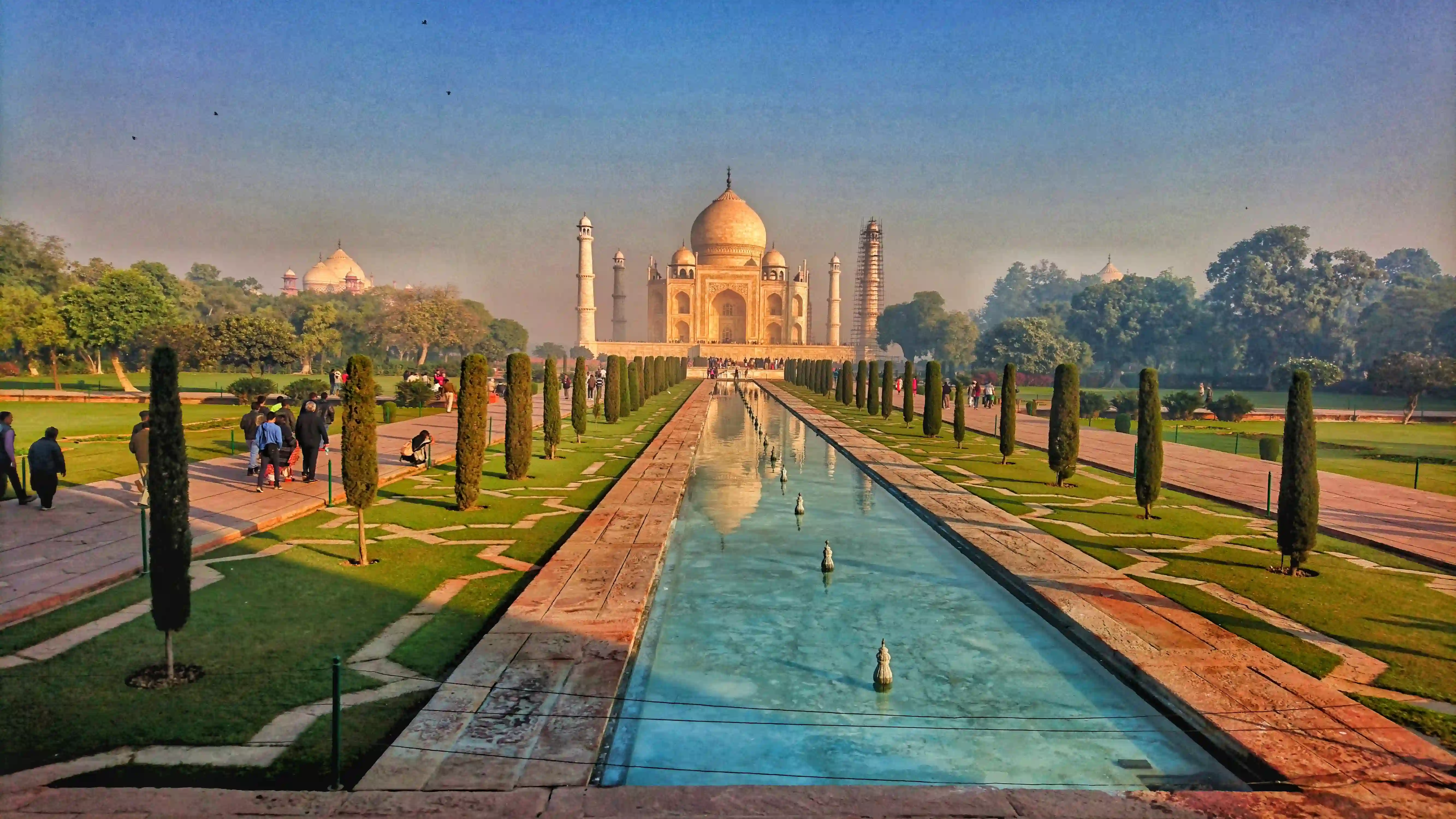
<div><h1>Hidden Facts About the Taj Mahal Most Tourists Don’t Know</h1></div><div><br></div><div><p></p></div><div>The Taj Mahal is one of the most visited monuments in the world, attracting millions of travelers every year. Most people know it as a symbol of love built by Emperor Shah Jahan for Mumtaz Mahal, but beyond its postcard beauty lies a world of mystery, secrets, and surprising details that many visitors never hear about.</div><div><p></p></div><div><br></div><div><p></p></div><div>If you’ve ever wanted to dive deeper into the lesser-known side of this world wonder, you're in the right place. Here are some <a href="https://www.pioneerholidays.org/tours/from-delhi-day-trip-to-taj-mahal-and-agra-fort-by-car" style="font-weight: bold;">Hidden Facts About the Taj Mahal</a> that will completely change how you see this masterpiece.</div><div><p></p></div><div><br></div><div><h2>1. The Taj Mahal Changes Color Throughout the Day</h2></div><div><p>One of the most mesmerizing <a href="https://en.wikipedia.org/wiki/Taj_Mahal" style="font-weight: bold;" title="" target="">Hidden Facts About the Taj Mahal</a> is its magical ability to change color with natural light.</p></div><div><ul></ul></div><div><li><strong>Early Morning:</strong> Soft pink shade</li></div><div><li><strong>Daylight:</strong> Bright, luminous white</li></div><div><li><strong>Evening:</strong> A golden-orange glow</li></div><div></div><div><p>Many believe this symbolizes the different moods of Mumtaz Mahal, Shah Jahan’s beloved queen.</p></div><div><br></div><div><h2>2. Shah Jahan Planned a Black Taj Mahal</h2></div><div><p>There is a popular legend that Shah Jahan intended to build a second mausoleum across the river Yamuna—completely black—to mirror the white Taj Mahal.</p></div><div><p>Although no black Taj ever materialized, ruins across the river in Mehtab Bagh support this theory and continue to intrigue historians.</p></div><div><br></div><div><h2>3. The Minarets Are Tilted on Purpose</h2></div><div><p>Visitors often assume the four minarets perfectly stand straight. But look closer—they’re actually slightly tilted outward.</p></div><div><ul></ul></div><div><li><strong>Why?</strong> To prevent them from crashing onto the main tomb in case of an earthquake. This clever architectural trick shows just how advanced Mughal engineering was.</li></div><div></div><div><br></div><div><h2>4. The Taj Mahal Is Built Using Optical Illusions</h2></div><div><p>The architects of the Taj Mahal were masters at manipulating perspective.</p></div><div><ul></ul></div><div><li>When you walk toward the main gate, the monument appears to grow rapidly in size.</li></div><div><li>Its minarets look perfectly straight only from certain angles.</li></div><div></div><div><p>This fascinating visual trick is one of the rare <span style="font-weight: bold;"><a href="https://www.pioneerholidays.org/tours/from-delhi-day-trip-to-taj-mahal-and-agra-fort-by-car">Hidden Facts About the Taj Mahal</a> </span>that even many tour guides forget to mention.</p></div><div><br></div><div><h2>5. It Isn’t Just White Marble—It Once Had Precious Stones Everywhere</h2></div><div><p>The Taj Mahal once sparkled with diamonds, rubies, emeralds, turquoise, and jade embedded into its marble walls.</p></div><div><p>Over centuries, invaders and British soldiers removed many precious stones, leaving behind only traces of the original opulence.</p></div><div><br></div><div><h2>6. The Calligraphy Gets Bigger as It Goes up the Wall</h2></div><div><p>The Quranic verses on the entrance gate appear uniform in size from the ground—but that’s an illusion.</p></div><div><p>The letters actually increase in size as they go higher up, making the entire inscription look perfectly balanced to viewers below.</p></div><div><br></div><div><h2>7. Inside the Taj Mahal Is Not What You Think</h2></div><div><p>Most tourists believe the ornate interior contains real graves. But the real graves lie beneath the mausoleum, hidden in a crypt closed to the public.</p></div><div><p>The marble chambers you see above ground are symbolic replicas.</p></div><div><br></div><div><h2>8. The Taj Mahal Is Perfectly Symmetrical—Except for One Thing</h2></div><div><p>Everything about this monument screams perfection and harmony. Paths, fountains, minarets, and arches are all precisely aligned.</p></div><div><p>The only element breaking this symmetry? Shah Jahan’s own cenotaph. It was added later by Aurangzeb and placed beside Mumtaz, disrupting the flawless design.</p></div><div><br></div><div><h2>9. It Took 22,000 Laborers and 1,000 Elephants to Build</h2></div><div><p>The construction of the Taj Mahal was a massive undertaking. Artisans, marble cutters, calligraphers, and craftsmen came from across the world—Persia, Turkey, and even Europe.</p></div><div><p>The entire project took 22 years, showcasing sheer manpower and unmatched skill.</p></div><div><br></div><div><h2>10. The Taj Mahal Barely Survived Several Wars</h2></div><div><p>During British colonial rule and various invasions, the Taj Mahal was nearly destroyed multiple times. Soldiers stripped gemstones, lifted carpets, removed silver doors, and attempted to dismantle parts of the complex.</p></div><div><p>Thankfully, restoration efforts saved it before more damage could be done.</p></div><div><br></div><div><h2>11. Its Foundation Relies on a Secret Ancient Engineering Technique</h2></div><div><p>The Taj Mahal is built on the soft banks of the Yamuna River. Normally, this would be dangerous—but the architects used a brilliant trick:</p></div><div><ul></ul></div><div><li>They placed the foundation on interlocking wooden planks that stay strong due to constant moisture from the river.</li></div><div></div><div><p>This is one of the most remarkable <a href="https://www.pioneerholidays.org/tours/from-delhi-day-trip-to-taj-mahal-and-agra-fort-by-car" style="font-weight: bold;">Hidden Facts About the Taj Mahal</a>, proving how advanced Mughal architecture really was.</p></div><div><br></div><div><h2>12. The Tower Heights Aren’t Equal (But Appear to Be)</h2></div><div><p>Although the minarets look identical, their height varies slightly. This helps maintain the illusion of perfect symmetry when viewed from the ground.</p></div><div><br></div><div><h2>13. The Taj Mahal Was Once Covered to Hide It from Bombers</h2></div><div><p>During World War II and the Indo-Pak wars, the Taj Mahal was covered with scaffolding and camouflaged to hide it from enemy aircraft.</p></div><div><p>Few people know the monument was once disguised to protect it from destruction.</p></div><div><br></div><div><h2>Conclusion</h2></div><div><p>The Taj Mahal is more than a symbol of love—it’s a masterpiece filled with mysteries, optical illusions, engineering marvels, and centuries of hidden stories.</p></div><div><p>These lesser-known insights reveal a deeper, richer understanding of one of the world’s greatest wonders. So the next time you visit, remember you’re not just seeing a monument—you’re experiencing layers of art, science, and history woven together.</p></div><div><p>By exploring these <a href="https://en.wikipedia.org/wiki/Taj_Mahal" title="" target="" style="font-weight: bold;">Hidden Facts About the Taj Mahal</a>, you gain a whole new appreciation for its beauty, brilliance, and breathtaking detail.</p></div>